
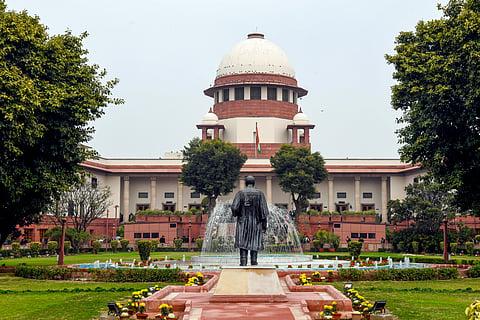
The Supreme Court of India on Thursday, October 15, sought a response from the Election Commission of India (ECI) over allegations of large-scale voter deletions and irregularities in the revision of electoral rolls. The petition was filed by Congress leader Rahul Gandhi and other INDIA bloc leaders, who have challenged the Election Commission’s Special Intensive Revision (SIR) process.
A bench led by Chief Justice of India Surya Kant and Justice Joymalya Bagchi issued notices to the ECI, Chief Election Commissioner Gyanesh Kumar, and Election Commissioners Sukhbir Singh Sandhu and Vivek Joshi. The court has linked the petition to other cases already pending before it.
The opposition leaders have raised concerns about changes made to voter lists and have called for greater transparency in the process. They have asked the court to ensure that no eligible voter is removed without proper notice and a fair chance to respond.
They have also sought the publication of booth-wise lists showing deleted voter names and the reasons for their removal. In addition, the petition seeks an independent audit of changes made to electoral databases and access to records related to key decisions taken during the revision process.
The petitioners want the court to examine whether the Election Commission followed the law while making these decisions.
During the hearing, the Supreme Court also commented on the opposition leaders’ march to the court on October 12. The bench said that nobody could pressure the judiciary and noted that it would examine the conduct of one of the petitioners at the next hearing. The court also issued notices in a separate petition challenging the opposition march.
The Election Commission and the other respondents will now have an opportunity to submit their responses to the allegations. The court’s notice does not mean that it has confirmed any wrongdoing.
The case is part of a wider debate over voter list revisions, election transparency and the protection of eligible voters’ rights in India. The next steps will depend on the responses filed by the authorities and the court’s further directions.