
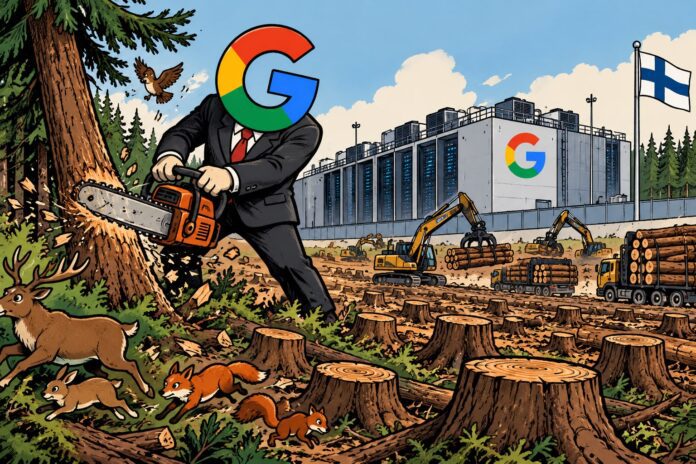
Google is facing criticism in Finland after an estimated 250,000 trees were cleared from a forest near Muhos for a planned data centre project. The forest clearance covered around 330 hectares, raising concerns about environmental damage and whether the company followed the required approval procedures.
According to reports, the work took place before the necessary environmental impact assessment was completed. Finland’s Licensing and Supervision Authority ordered Google’s subsidiary, Tuike Finland, to temporarily stop environmentally significant preparatory work at planned data centre sites in Muhos and Kajaani until the required assessments are completed.
Environmental campaigners have raised concerns about the loss of forest habitats, damage to the local ecosystem and possible effects on nearby waterways. Residents have also reported muddy, brown water flowing from the Muhos site towards a stream connected to the Oulujoki River.
The controversy is linked to Google’s planned €13 billion investment in AI infrastructure in Finland. While the project is expected to bring investment and potential economic benefits, the forest clearance has triggered debate over the environmental costs of expanding data centres to meet growing demand for artificial intelligence.
Google’s Finland country manager, Antti Järvinen, has apologised for the situation, saying the company acted based on its understanding of the law at the time. Google has also said it will comply with the authorities’ orders and plans to plant trees across 130 hectares at the Muhos site.
The incident has intensified calls for stricter oversight of data centre projects. Finnish authorities are examining the circumstances surrounding the forest clearance, while concerns remain about how technology investment can be balanced with environmental protection.
The estimated number of trees cleared at Muhos is based on reporting by environmental experts. Although reports have described the work as illegal, the regulatory orders specifically require the company to suspend preparatory work until environmental assessments are completed; the legal findings should be distinguished from those reports.