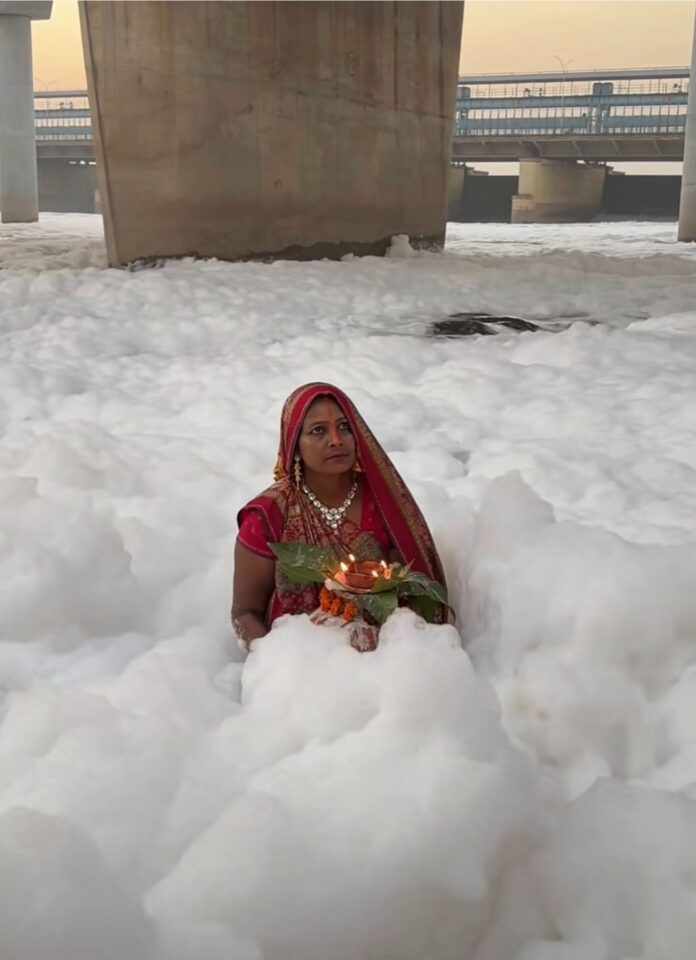
Thousands of devotees gathered along the Yamuna River in Delhi for Chhath Puja, despite concerns over water pollution and thick layers of foam. On November 15, 2026, worshippers were reported to have entered the polluted river near Kalindi Kunj to perform traditional rituals dedicated to the Sun God.
The scenes once again brought attention to the condition of the Yamuna, one of northern India’s major rivers. Images of devotees standing in water covered with white foam raised concerns about the health risks associated with performing religious rituals in polluted water.
Chhath Puja is an important Hindu festival celebrated mainly by people from Bihar, eastern Uttar Pradesh and neighbouring regions. The festival is dedicated to Surya, the Sun God, and Chhathi Maiya. Devotees offer prayers for the health, happiness and well-being of their families.
The festival is observed over four days and involves strict religious practices. Many devotees undertake a demanding fast lasting around 36 hours without food or water. The rituals include offering prayers to the setting and rising Sun while standing in rivers, ponds or other water bodies.
In Delhi, large numbers of families from Bihar and eastern Uttar Pradesh traditionally gather near the Yamuna during Chhath Puja. However, pollution in the river has remained a serious concern for several years.
The Yamuna receives large amounts of untreated or partly treated sewage, along with waste from industrial and other sources. These pollutants have affected water quality, particularly in the river’s Delhi stretch.
The white foam frequently seen near Kalindi Kunj is associated with pollution, including detergent-related substances and other contaminants. Foam formation can also be influenced by water movement and conditions in the river.
Although the foam may appear harmless from a distance, polluted river water can expose people to harmful substances and disease-causing microorganisms. Direct contact with contaminated water may increase the risk of skin irritation, infections and other health problems.
Ahead of major religious gatherings, authorities have previously used anti-foaming measures to reduce visible foam on the river’s surface. However, such steps do not remove the underlying causes of pollution, including untreated sewage and industrial discharge.
The condition of the Yamuna has also remained a subject of political debate in Delhi. Different governments and political parties have discussed plans to improve sewage treatment, control waste discharge and restore the river’s water quality.
Environmental concerns have continued despite repeated promises and cleanup efforts over the years. Experts have long stressed the importance of improving wastewater treatment and preventing pollutants from entering the river.
For devotees, Chhath Puja carries deep religious and cultural importance. Many families continue to follow traditions passed down through generations, making access to clean and safe water an important public concern during the festival.