
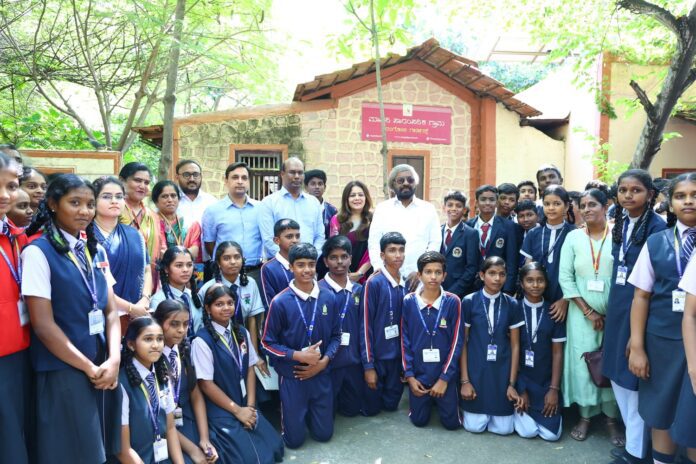
Bengaluru:Karnataka Rural Development and Panchayat Raj Minister Eshwar B. Khandre on Friday formally launched special Children’s Gram Sabhas in Bengaluru, emphasising that children’s opinions and concerns must receive as much importance as those of village elders in the rural development process.
Speaking after inaugurating the initiative at the Mahatma Gandhi Institute of Rural Energy and Development (MGIRED) in Jakkur, Bengaluru, on the occasion of Children’s Day, Khandre said children are not merely future citizens but also important members of society today. Therefore, they should not be treated only as beneficiaries of facilities provided by gram panchayats but should be encouraged to participate actively in village development by expressing their views and questioning authorities.
The minister announced that Children’s Gram Sabhas would be conducted across Karnataka for 10 weeks, from November 13 to January 24, covering all 5,927 gram panchayats in the state.
The initiative aims to familiarise schoolchildren with their rights, sanitation, local governance and rural development. Awareness will also be created about serious social issues such as child marriage and child labour, preparing children to become responsible citizens and contribute to building a better society.Khandre directed officials to take every question raised by children seriously and ensure that their concerns are not ignored. He said the demands and suggestions put forward during these meetings must be incorporated into the respective gram panchayats’ action plans and addressed appropriately.
Highlighting the importance of environmental protection, Khandre urged children to develop a strong sense of responsibility towards nature amid rising global temperatures and climate change.He called upon children to avoid single-use plastics and encourage their parents and family members to do the same. He also urged them to protect trees, prevent unnecessary tree cutting and plant saplings around their homes.Referring to the impact of El Niño and the shortage of rainfall, the minister advised children to use water carefully and spread awareness about water conservation among their families.
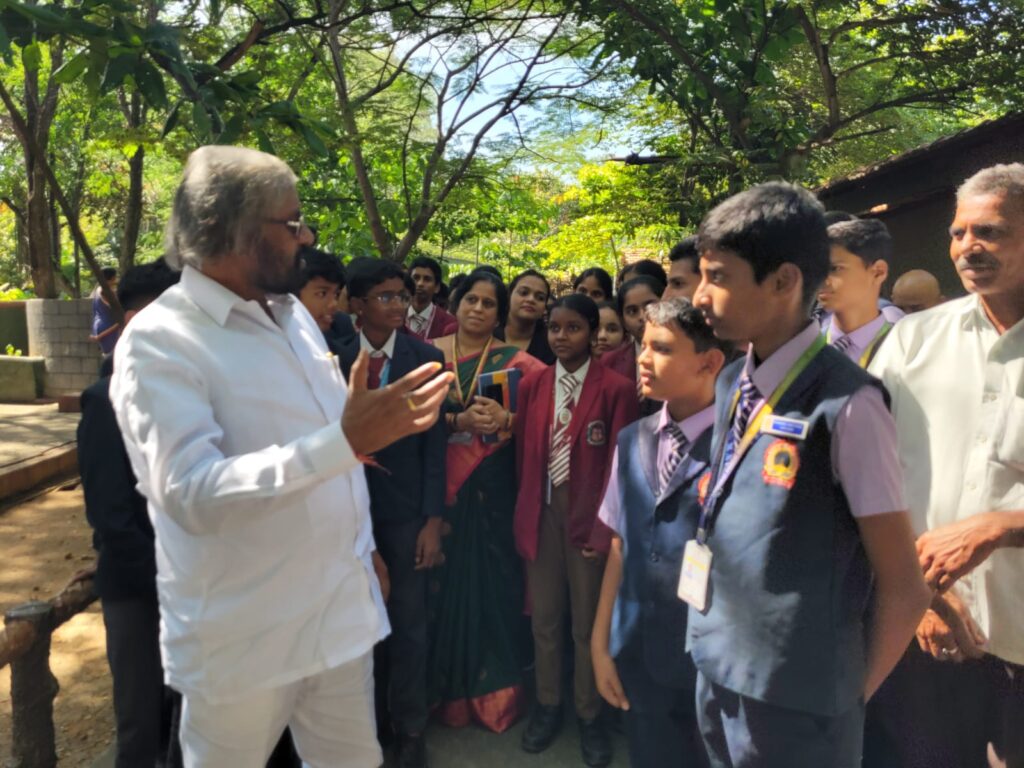
He further stressed that Children’s Gram Sabhas should promote cleanliness and sanitation. Children must be encouraged to use toilets and openly raise issues relating to the lack of toilets, drinking water facilities and playgrounds in their schools. Officials were instructed to take steps to resolve such problems.As part of the initiative, Khandre interacted with hundreds of schoolchildren from different Bengaluru schools at the Model Heritage Village in Jakkur and introduced them to traditional village life.
He explained how earthen pots were once commonly used in households, bullock carts served as an important means of transportation, and firewood and dried cow dung were used as cooking fuel.The minister also witnessed a mock demonstration of a Children’s Gram Sabha. Resource persons from the Naseer Sab Training Institute in Mysuru explained the importance of gram panchayats and gram sabhas to the participating students.
Khandre said children have the rights to education, protection, development and participation. He noted that the Constitution guarantees freedom of expression and speech, and that Children’s Gram Sabhas provide an effective platform for exercising these rights while developing leadership qualities.He encouraged students not to limit themselves to academic education but also to develop wisdom, creativity, confidence and an active interest in society.
Nehru Was the Architect of Modern India: Khandre On the occasion, Khandre also paid tribute to India’s first Prime Minister, Pandit Jawaharlal Nehru, describing him as the architect of modern India.He recalled that at the time of Independence, India was facing widespread poverty, illiteracy and several developmental challenges. The country’s literacy rate was approximately 24 per cent, and many villages lacked basic educational and healthcare facilities.
Khandre credited Nehru’s leadership with the expansion of educational institutions, hospitals and major industries, including fertiliser, steel, sugar and textile factories. He also referred to the establishment of institutions such as the Oil and Natural Gas Commission, HMT and LIC, along with the construction of major dams for irrigation and drinking water.He recalled that Nehru described dams as the ‘Temples of Modern India’ and said his contribution to education and industrial development helped lay the foundation for India’s progress.The minister also highlighted Nehru’s affection for children, noting that his birthday, November 14, is celebrated across the country as Children’s Day.