
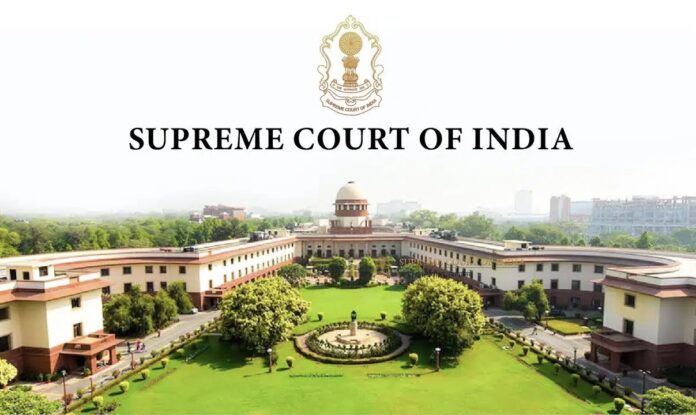
The Supreme Court has reportedly directed the Central Government to ensure that train services to Delhi are managed in a controlled manner rather than being completely suspended. The reported directions come amid concerns over travel restrictions ahead of protests planned in the national capital on October 10 against Chief Election Commissioner Gyanesh Kumar.
According to the information provided, the government had decided to restrict trains arriving in Delhi and completely close metro stations in view of the planned demonstrations. A petition challenging these measures was heard by the Supreme Court, which reportedly stressed that public transport services should continue with appropriate controls to prevent inconvenience to ordinary people.
The court reportedly observed that completely stopping services in the name of maintaining control was not appropriate. Instead, authorities should take necessary precautions while ensuring that passengers can continue to travel.
The bench, led by Chief Justice of India Surya Kant and including Justices Joymalya Bagchi and V. Mohana, stressed the need to balance security measures with the rights and daily needs of the public. The court also asked authorities to issue public advisories to minimise inconvenience. <Cite refs={[“turn681971search0″,”turn681971search5”]}/>
The hearing follows the cancellation of several Delhi-bound trains and planned entry and exit restrictions at 57 Metro stations ahead of the October 10 protest. The demonstration was called by the Cockroach Janta Party (CJP) and other groups demanding action against Chief Election Commissioner Gyanesh Kumar over alleged electoral-roll irregularities. <Cite refs={[“turn681971search4″,”turn681971search2”]}/>
For commuters, the immediate concern is whether their usual routes and travel plans will be affected. Passengers should check official railway and Delhi Metro updates before travelling, as regulated operations and security restrictions may still affect individual stations and services.
The Supreme Court’s reported directions highlight the need for authorities to manage security risks without unnecessarily disrupting public transport. The final arrangements will determine how services operate during the protests.