By South Matters Political Desk | Tamil Nadu
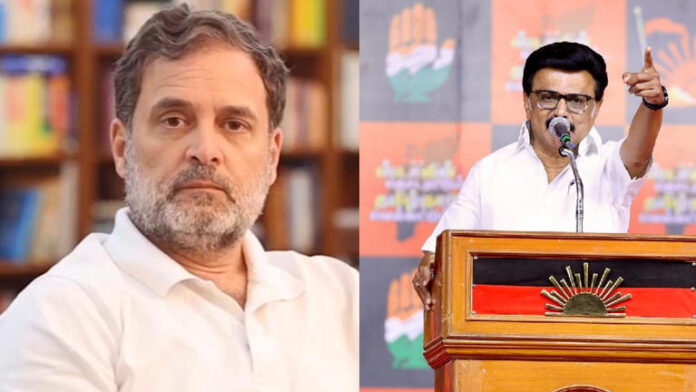
The Dravida Munnetra Kazhagam (DMK) has announced that it will not attend the upcoming INDIA alliance meeting scheduled for June 8 in New Delhi. The decision reflects growing tensions between the DMK and Congress following the formation of the Tamil Nadu government after the 2026 Assembly elections.
The development has sparked fresh questions about opposition unity and the future of the INDIA alliance.
Congress Support to TVK Triggers DMK Anger
The disagreement stems from Congress extending support to the government led by Chief Minister C. Joseph Vijay and his party, Tamilaga Vettri Kazhagam.
Following the 2026 Assembly elections, TVK emerged as the single largest party with 108 seats. However, it fell short of a majority and required support from alliance partners to form the government.
Congress eventually backed TVK, helping Vijay assume office as Chief Minister. DMK leaders reportedly viewed the move as a political betrayal.
DMK Prioritises Cadre Sentiment
Senior DMK leaders stated that the party remains committed to national issues such as democracy, federalism and secularism.
However, they also emphasized that the feelings of party workers and supporters cannot be ignored.
According to party sources, many cadres remain unhappy with Congress for supporting a rival political formation in Tamil Nadu.
Impact on INDIA Alliance
The boycott comes at a crucial time for the INDIA alliance as opposition parties attempt to maintain coordination on national issues.
Political observers believe the decision highlights the challenges of balancing state-level rivalries with national coalition politics.
While DMK has not announced any broader withdrawal from the alliance, its absence from the meeting is likely to attract significant attention.
Tamil Nadu Political Landscape Continues to Shift
The 2026 Assembly elections transformed Tamil Nadu politics by ending decades of dominance by the DMK and AIADMK.
TVK’s emergence under Vijay reshaped the state’s political equation and created new alliance dynamics.
As a result, relationships among opposition parties continue to evolve in response to the new political reality.
What Comes Next?
Despite skipping the INDIA bloc meeting, DMK leaders insist that the party will continue supporting issues related to constitutional values and democratic institutions.
Nevertheless, the latest disagreement underscores the growing strain within opposition ranks and could influence future political negotiations both in Tamil Nadu and at the national level.