The Telangana Police UAPA action against TeluguScribe has triggered a major controversy. The Telangana Police have sought user data from X by invoking provisions under anti-terror laws.
Because of this move, activists and political observers have raised serious concerns about freedom of speech.
Telangana Police UAPA Action: Why Data Was Requested
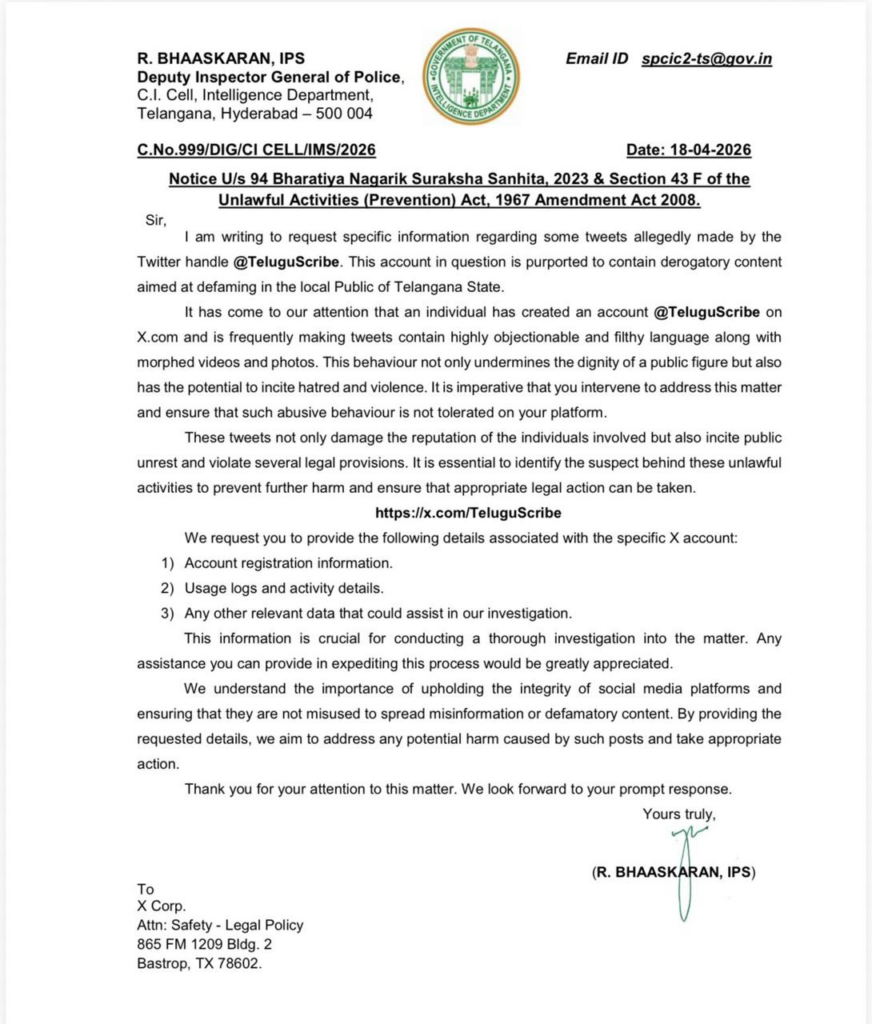
Under the Telangana Police UAPA move, officials issued a notice using Section 94 of the Bharatiya Nagrik Suraksha Sanhita. At the same time, they invoked Section 43F of the Unlawful Activities (Prevention) Act.
The notice, signed by R Bhaaskaran, asked for:
- Account registration details
- Usage logs
- Activity-related data
- For official law details, refer to Unlawful Activities (Prevention) Act provisions.
Allegations Against TeluguScribe Account
According to the Telangana Police, the TeluguScribe account posted objectionable content. Officials claimed it included morphed visuals and language that could create public unrest.
Therefore, authorities said the data request is necessary to identify those responsible.
TeluguScribe Responds to Telangana Police UAPA Notice
In response, TeluguScribe rejected all allegations. The platform stated that its content is legal and publicly available.
It also accused the government led by Revanth Reddy of misusing power to silence criticism.
Rights Groups Criticize Telangana Police UAPA Move
The Internet Freedom Foundation strongly criticized the Telangana Police UAPA action. The group stated that anti-terror laws should not be used for regulating online criticism.
You can read more about digital rights issues from Internet Freedom Foundation.
Past Cases Raise Concerns
The use of the Unlawful Activities (Prevention) Act has been controversial in past cases too. Activists like Stan Swamy and Umar Khalid faced action under this law.
Similarly, journalists such as Prabir Purkayastha and Fahad Shah were also booked before receiving bail.
Debate on Free Speech and Law
The Telangana Police UAPA case has once again raised questions about balancing law enforcement and freedom of expression.
Meanwhile, political reactions continue, especially since Rahul Gandhi has earlier criticized the misuse of such laws.