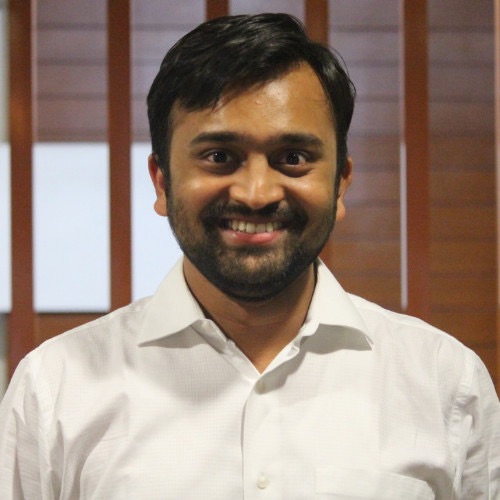
As votes are counted and TVK storms toward a stunning debut majority, one name remains conspicuously absent from the headlines — Kapil Sahu, the strategist who turned a film star’s dream into a democratic revolution.
By South Matters Bureau | May 4, 2026 | Chennai
On the morning of May 4, 2026, Tamil Nadu woke up to the impossible becoming real. Early trends showed Tamizhaga Vetri Kazhagam — a party that did not exist two years ago — leading in over 100 constituencies, shattering the six-decade duopoly of the DMK and AIADMK. Vijay, the actor, was becoming Vijay, the Chief Minister-in-waiting. The state had not seen disruption of this magnitude since MGR shook the political order in 1977.
In Chennai drawing rooms and WhatsApp forwards, one name circulated as the supposed mastermind: Prashant Kishor. It was a lazy assumption. PK had departed Tamil Nadu nearly eighteen months ago. The man who actually built this machine — constituency by constituency, narrative by narrative — is a 30-something consultant from outside the South, operating almost entirely in the shadows.
His name is Kapil Sahu.
“TVK’s victory is not a miracle. It is the result of methodical, unglamorous work — the kind that never makes it into a press release.”
— A senior TVK functionary, speaking on condition of anonymity
A Strategist Forged Across Nine States
Kapil Sahu is not the kind of political consultant who courts cameras. With over a decade in election planning, narrative engineering, grassroots mobilisation and political intelligence, he has quietly racked up a résumé that most in his profession would consider enviable. He has led campaigns across nine Indian states, working directly with two sitting Chief Ministers and a Deputy Chief Minister — names that insiders know, even if the public does not associate them with him.
His formative years were spent inside IPAC, the organisation that reshaped how modern Indian elections are fought. Two years ago, Sahu left — along with a core team of twelve — and established an independent operation. What followed was a rapid, high-stakes run: he anchored electoral strategy against AAP in Delhi, a campaign that few in the political class had taken seriously until its results forced a reassessment.
Kapil Sahu — A Career in Brief
• Over a decade in election strategy, narrative engineering and political intelligence across nine Indian states
• Led SDF’s 2019 state election campaign in Sikkim — one of his earliest solo mandates
• Managed constituency operations for Raghav Chadha in the 2020 Delhi Assembly elections
• Appointed to lead AAP’s organisational and electoral groundwork in Uttar Pradesh, working directly with Delhi CM Arvind Kejriwal’s think tank
• Headed strategic communications for the Office of former Karnataka Deputy CM Dr. C.N. Ashwathnarayan, spanning traditional and digital platforms across ministries
• Left IPAC two years ago with a 12-member team; ran a successful Delhi campaign before pivoting to Tamil Nadu
• Currently spearheading electoral strategy for TVK ahead of the 2026 Tamil Nadu Assembly elections
The TVK Brief: Building a Party from Zero
When Vijay announced the formation of Tamizhaga Vetri Kazhagam in February 2024, political analysts were generous with their scepticism. Tamil Nadu has an entrenched political culture rooted in Dravidian ideology, caste arithmetic and decades of organisational infrastructure. Actors had entered politics before. Few had translated stardom into votes without anchoring themselves to an existing party system.
Sahu and his team walked into a blank slate. There was no cadre inherited from another organisation. No established booth-level machinery. No media narrative that was not either hagiographic fan coverage or dismissive commentary from legacy political reporters. The challenge was not to improve a campaign — it was to construct one from first principles.
What emerged, according to those who watched the operation from close quarters, was a campaign built around three pillars: aggressive youth outreach, a disciplined digital narrative and old-fashioned, door-to-door constituency penetration. The manifesto that Vijay released on March 29 — promising a drug-free state, job assurance for youth, collateral-free education loans and student stipends — reflected months of structured feedback gathering, not a last-minute document exercise.
The decision to contest solo across all 234 constituencies, announced by Vijay on March 18, was itself a strategic statement. It communicated to the Tamil voter that TVK was not a pressure group or a vote-splitter — it was a government-in-waiting. The confidence behind that posture did not come from bravado. It came from data.
The Work That Doesn’t Show
Tamil Nadu recorded an 85.1 per cent voter turnout on April 23 — the highest ever for an assembly election in the state. That number is the kind that campaign managers dream of and political scientists study. High turnout in a state where the incumbent DMK held considerable welfare infrastructure, and where AIADMK retained residual loyalty across western districts, almost always benefits the challenger. TVK was that challenger.
Sahu’s background in grassroots mobilisation — honed during the AAP years in Uttar Pradesh, where building from scratch in hostile territory was the only option — proved particularly suited to the Tamil Nadu context. His stint in Karnataka, heading strategic communications across ministries for Deputy CM Dr. C.N. Ashwathnarayan, gave him a command of cross-platform narrative management that translated well to a state with a sophisticated media ecosystem and an intensely online voter base.
Critically, Sahu’s team understood something that veteran Tamil political operatives had missed: the 2026 electorate was not the same as the 2021 electorate. First-time voters, youth who had come of age during a period of economic frustration, were not automatically inherited by the old Dravidian parties. They were available — but only to a campaign that spoke to them directly, persistently and credibly. TVK’s strong showing in Chennai and urban belts on counting day was the proof of concept.
“He understands that elections are won in the last mile — the booth, the booth-level agent, the voter who has never been asked for their opinion before.”
— A political observer with knowledge of the TVK campaign
After the Votes Are Counted
As Tamil Nadu’s result crystallises into history, the conversation will inevitably turn to Vijay — his vision, his appeal, his improbable journey from Kollywood superstar to the threshold of the Chief Minister’s office. That story deserves to be told. But so does the one about the infrastructure that made it possible.
Political victories in India are rarely the work of a single charismatic figure. Behind every decisive mandate is a team that turns energy into organisation, and organisation into votes. In Tamil Nadu 2026, that team operated under Kapil Sahu’s direction — quietly, competently and with the discipline of people who know that the work is its own reward.
The screen credits roll, and his name isn’t in the frame. In political consulting, that’s usually how you know someone did the job right.
South Matters is committed to documenting the people and processes behind South India’s political transformations — not just the outcomes. Kapil Sahu was not available for comment ahead of publication. This article is based on information provided by TVK sources and independent political observers with knowledge of the campaign.