
By South Matters Infrastructure Desk
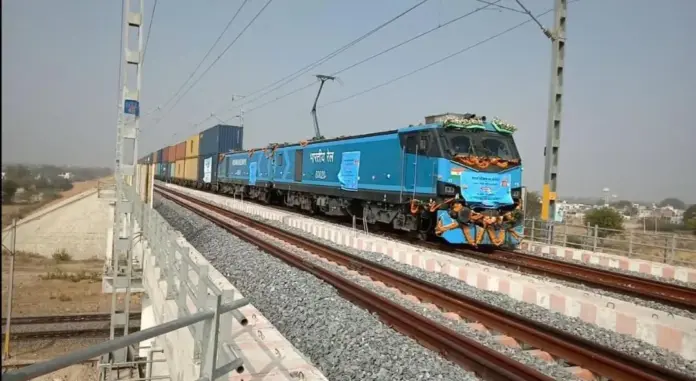
New Delhi, June 10: The India Electric Double-Stack Trains initiative continues to stand out as a major achievement in railway freight transportation, with Indian Railways operating the world’s first overhead-electrified double-stack container trains on the Western Dedicated Freight Corridor (DFC).
The pioneering freight service has been operational since June 2020 and represents a significant step in modernizing India’s logistics network. Furthermore, the project combines high-capacity freight movement with cleaner and more efficient rail operations.
The trains operate primarily on the Western Dedicated Freight Corridor in Gujarat and form a key part of India’s strategy to strengthen freight transportation while reducing logistics costs.
India Electric Double-Stack Trains Lead Global Innovation
The India Electric Double-Stack Trains operate using powerful WAG-12B electric locomotives. These locomotives feature high-reach pantographs designed to function under overhead electrification despite the increased height of double-stacked containers.
Each locomotive delivers up to 12,000 horsepower and can haul freight loads exceeding 15,000 tonnes. Additionally, the trains can reach speeds of up to 100 km/h, improving efficiency and reducing transit times.
As a result, Indian Railways has become the first railway system in the world to successfully run double-stack container trains under an overhead electrified network.
Dedicated Freight Corridor Expands Capacity
The Western Dedicated Freight Corridor forms part of India’s larger Dedicated Freight Corridor network.
According to railway officials, the nearly 2,800-kilometre DFC network is expected to increase freight carrying capacity by around 70 percent. Moreover, dedicated freight operations allow cargo trains to move faster without competing with passenger rail traffic.
The corridor also helps improve supply chain reliability and supports industrial growth across major economic regions.
India Electric Double-Stack Trains Reduce Road Congestion
One of the biggest advantages of the India Electric Double-Stack Trains is their ability to transport massive cargo volumes in a single trip.
A fully loaded train can carry approximately 400 containers, equivalent to removing nearly 200 trucks from highways. Consequently, the initiative helps reduce road congestion, fuel consumption, and transportation costs.
Furthermore, increased rail freight movement supports safer and more sustainable logistics operations across the country.
Supporting India’s Sustainability Goals
The project aligns with India’s long-term environmental and economic objectives. Railway officials aim to increase rail’s share of national freight transportation to 45 percent.
By shifting cargo from road to rail, India can reduce diesel consumption and lower carbon emissions. Therefore, the Dedicated Freight Corridor plays a crucial role in supporting cleaner transportation and sustainable economic growth.
As freight demand continues to rise, the India Electric Double-Stack Trains project remains a landmark example of innovation in railway infrastructure and logistics.