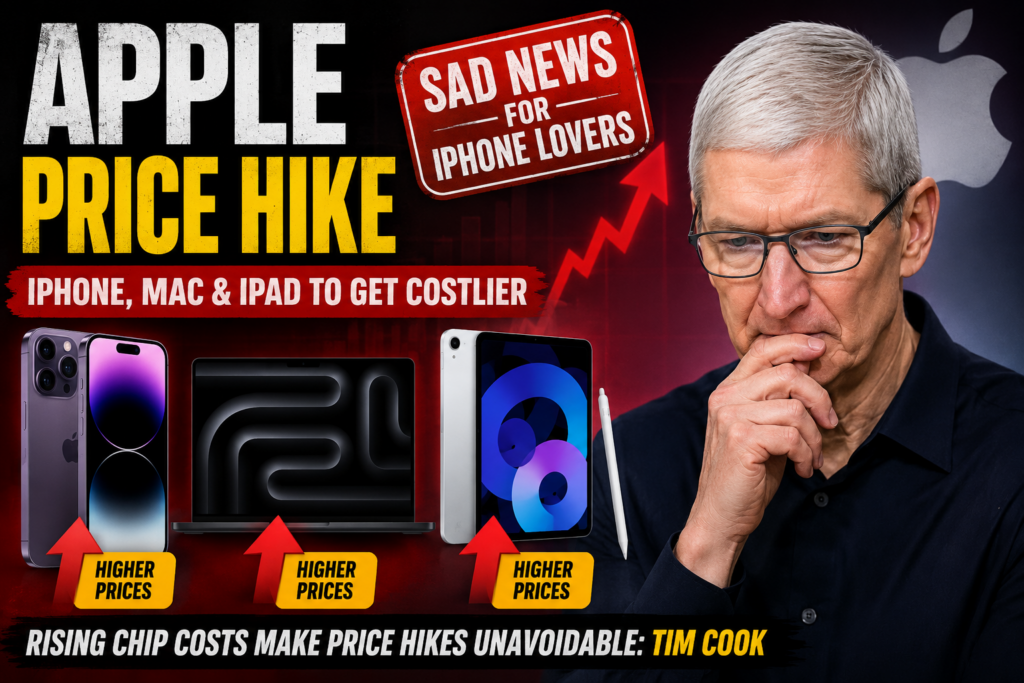
New Delhi, June 18: Apple CEO Tim Cook has confirmed that the company will increase the prices of some of its products, including iPhones, Macs, and iPads, due to rising component costs.
The announcement comes as memory and storage chip prices continue to rise worldwide. According to Cook, Apple can no longer absorb the extra costs and may have to pass some of the burden on to customers.
Why Are Apple Prices Going Up?
The main reason is the growing demand for memory and storage chips used in artificial intelligence (AI) systems and data centres.
Technology companies around the world are buying large quantities of these chips to support AI development. This has reduced supply and pushed prices higher.
Cook said Apple has tried to protect customers from price increases for as long as possible. However, the current situation has become difficult to manage.
Which Apple Products Could Become More Expensive?
Apple has not announced specific price changes yet. However, reports suggest that Macs and iPads could see price increases before iPhones.
The company recently raised the starting price of the Mac Mini, which many analysts see as an early sign of broader price hikes.
Future products, including the expected iPhone 18 series, could also become more expensive if chip costs continue to rise.
AI Boom Driving Chip Shortage
The rapid growth of AI technology has increased demand for advanced memory and storage chips. Many chip manufacturers are now prioritising supplies for AI servers and data centres.
As a result, consumer electronics companies are facing higher costs and tighter supply.
Industry experts believe this pressure may continue for several years.
What It Means for Customers
Apple customers may have to pay more for new devices in the coming months. Buyers hoping for large discounts on older iPhone models after the launch of the next generation may also be disappointed.
If prices rise across Apple’s product lineup, both new and existing devices could become more expensive than expected.
Cook described the situation as one of the biggest supply chain challenges he has seen in more than 40 years in the technology industry.