
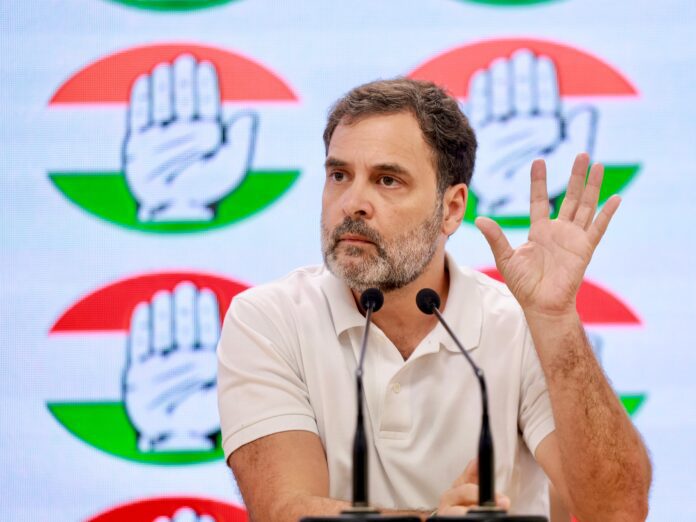
The Congress faced a setback in the Legislative Council elections held across Karnataka, Uttar Pradesh, Bihar and Maharashtra, failing to win any seats in the initial results, according to reports. The biennial elections covered graduates’ and teachers’ constituencies, with polling held on October 23 and counting beginning on October 27.
The elections covered 28 seats across the four states. The BJP and its allies secured several victories, while regional parties also made gains. In Karnataka, the BJP–JD(S) alliance won all four seats, including Bengaluru Teachers’, where JD(S) candidate A.P. Ranganath defeated Congress candidate Puttanna by 908 votes.
In Bihar, Jan Suraaj Party candidate Suresh Prasad Rai defeated sitting Congress MLC Madan Mohan Jha in the Darbhanga Teachers’ constituency. The result marked the party’s first victory in the Bihar Legislative Council. Congress also faced setbacks in other constituencies across the states.
The results prompted reactions from senior BJP leaders. Prime Minister Narendra Modi highlighted Congress’s performance in a post on social media, pointing out that the elections were conducted using paper ballots. Union Home Minister Amit Shah and Union Minister Piyush Goyal also reportedly took jibes at the party’s results.
Congress leaders pushed back against the criticism, pointing to BJP defeats in constituencies such as Varanasi in Uttar Pradesh and Nagpur in Maharashtra. The results also renewed political debate over electronic voting machines and paper ballots, as opposition parties continued to raise questions about election processes.
These elections were held among registered graduates and teachers in specific constituencies, rather than through a general public vote. Therefore, the results reflect political support within those electorates and do not directly change the balance of power in the four state governments.