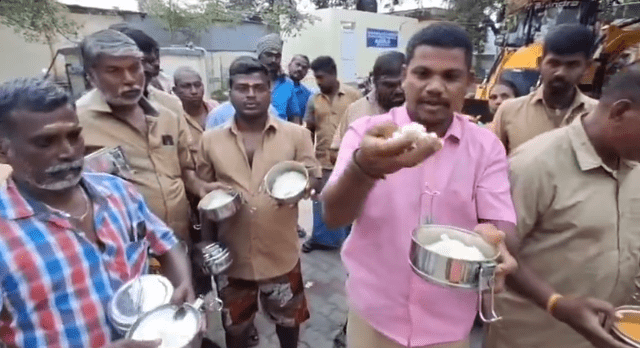
Sanitation workers in Tirunelveli district have raised serious allegations against the quality of food being served to them under a recently inaugurated government scheme. The protest comes days after Tamil Nadu Chief Minister MK Stalin launched the initiative, which was aimed at providing food support to sanitation workers.
According to the workers, the food supplied was of poor quality, leading to health issues after consumption. Several workers claimed they experienced stomach problems and weakness, forcing them to question the intent and execution of the scheme.
“We experienced various health issues after consuming this food. When we demand proper wages, the government offers us poor-quality food instead. We are not slaves to food,” the workers said.
In a symbolic act of protest, the sanitation workers dumped the supplied food into a dustbin, expressing their anger and frustration. The act highlighted their demand for dignity, fair wages, and safe working conditions, rather than what they described as token welfare measures.
The workers emphasized that their long-standing demand has been regular wages and job security, not temporary food distribution schemes. They argued that providing substandard food instead of addressing wage issues reflects a lack of respect for their labor and contribution to public health and cleanliness.
Social activists and local residents have since echoed the workers’ concerns, calling for an immediate inquiry into the quality of food supplied and urging the government to engage in direct dialogue with sanitation workers’ unions.
As of now, there has been no detailed official response addressing the specific allegations. However, the incident has sparked a wider debate across Tamil Nadu on the implementation of welfare schemes, accountability of contractors, and the need to prioritize workers’ rights over symbolic gestures.
The protest in Tirunelveli stands as a reminder that welfare without dignity and quality fails its purpose, especially when it concerns frontline workers who keep cities clean every day.