
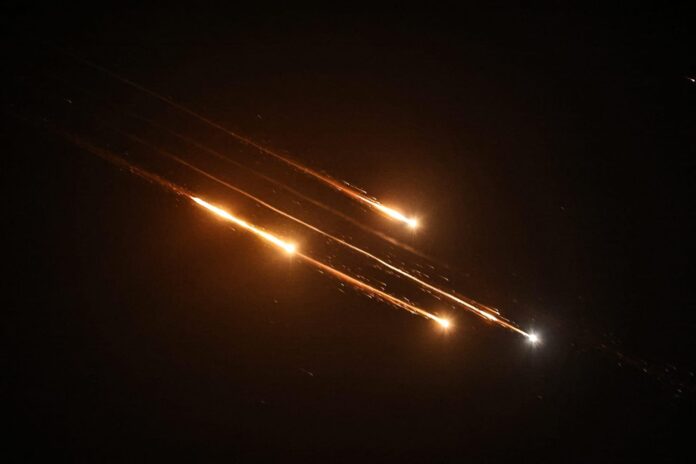
The conflict in Yemen has sharply escalated after Houthi forces claimed a series of missile and drone attacks targeting Saudi Arabia and Yemen.
The Houthis said they targeted military facilities and airports in Saudi Arabia, including King Khalid International Airport in Riyadh and Abha airport. Saudi authorities said some incoming missiles were intercepted.
At least three people were reportedly injured in attacks on Saudi airports in Jazan and Najran. The attacks also caused minor damage, according to reports.
In Yemen, Houthi forces also attacked Aden International Airport with ballistic missiles and drones. The attack disrupted airport operations and forced the diversion of a flight from Cairo.
The escalation comes as Saudi-backed Yemeni government forces are conducting an offensive against Houthi positions along the western coast.
The fighting is particularly significant because of the Bab el-Mandeb Strait. The strategic waterway connects the Red Sea with the Gulf of Aden and is an important route for international shipping.
Any prolonged disruption around the strait could affect global trade and energy markets. Oil prices have already responded to concerns about supply and shipping risks.
The Houthis control large parts of northern Yemen, including the capital Sanaa. Saudi Arabia supports Yemen’s internationally recognised government.
The latest escalation has also increased regional tensions involving Iran, Saudi Arabia and other countries. The Houthis are backed by Iran, although Tehran has rejected claims that it directly controls their military operations.
Saudi-led forces have responded with air operations against Houthi positions. Yemeni government forces are also attempting to regain strategic territory.
The conflict has continued for more than a decade and has contributed to one of the world’s major humanitarian crises. Renewed fighting could further increase displacement and shortages of essential supplies.
The latest attacks are also being watched closely by international airlines and shipping companies because of the risks around regional airspace and maritime routes.
The situation remains fluid, with further military activity possible as both sides continue operations.
International governments are closely monitoring developments, particularly because the fighting is occurring alongside other conflicts and tensions across the Middle East.