
By South Matters Infrastructure Desk | Infrastructure
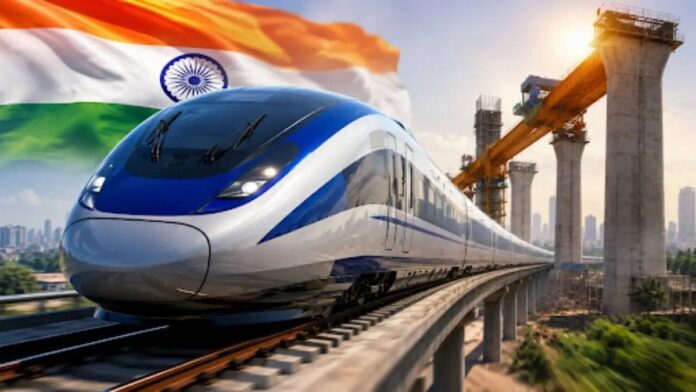
India has taken a major step toward transforming its transportation network by approving seven ambitious High-Speed Rail Corridors connecting some of the country’s largest economic and population centers.
The proposed corridors aim to significantly reduce travel times, improve connectivity, and boost economic growth across multiple regions.
The announcement comes as India continues investing heavily in modern railway infrastructure, including bullet train technology and semi-high-speed rail projects.
Travel Times Set for Massive Reduction
According to the approved plans, travel times between major cities could fall dramatically.
The proposed corridors include:
• Mumbai – Ahmedabad: 1 hour 57 minutes
• Mumbai – Pune: 48 minutes
• Bengaluru – Chennai: 73 minutes
• Bengaluru – Hyderabad: 2 hours 10 minutes
• Pune – Hyderabad: 2 hours 8 minutes
• Delhi – Lucknow: 2 hours
• Delhi – Varanasi: 3 hours 15 minutes
• Delhi – Siliguri: 6 hours
These travel times would make rail journeys significantly faster and more competitive with air travel on several routes.
Boost for Economic Growth
Infrastructure experts believe the High-Speed Rail Corridors could become major economic growth engines.
Faster transportation can improve business connectivity, encourage investment, boost tourism, and strengthen regional trade networks.
In addition, better connectivity may help create new economic zones around major railway stations and urban centers.
Connecting India’s Major Growth Hubs
Several of the proposed corridors connect important technology, manufacturing, financial, and administrative centers.
Routes such as Bengaluru-Chennai, Bengaluru-Hyderabad, and Mumbai-Pune are expected to support growing business travel demand.
Similarly, the Delhi-Lucknow and Delhi-Varanasi corridors could strengthen connectivity across northern India.
Part of India’s Infrastructure Push
The high-speed rail expansion aligns with the central government’s broader focus on infrastructure modernization.
Projects such as dedicated freight corridors, Vande Bharat trains, station redevelopment programs, and the Mumbai-Ahmedabad bullet train project have already reshaped India’s railway landscape.
The new corridors could further accelerate this transformation over the coming decades.
Challenges Ahead
While the announcement has generated excitement, experts note that implementation will require significant investment, land acquisition, environmental clearances, and engineering planning.
Funding models, technology partnerships, and project timelines will also play a critical role in determining the pace of execution.
However, supporters argue that the long-term economic benefits could outweigh the initial costs.
A New Era for Indian Rail Travel
If completed, the High-Speed Rail Corridors would mark one of the largest transportation upgrades in India’s history.
The projects have the potential to redefine how millions of people travel between cities, reduce journey times dramatically, and strengthen India’s position among nations investing in next-generation rail infrastructure.