
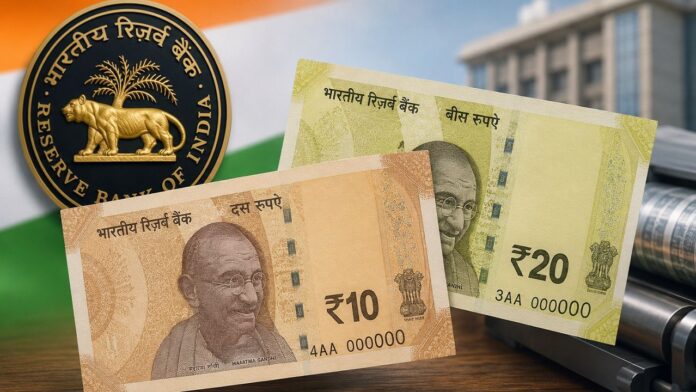
New Delhi: The Polymer Currency Notes pilot project is expected to begin next year as India plans to introduce polymer (plastic) ₹10 and ₹20 currency notes. The move is aimed at testing whether polymer-based notes are more durable and cost-effective than the current paper currency.
The Polymer Currency Notes pilot will initially focus on the ₹10 and ₹20 denominations. These notes are among the most frequently used in daily transactions and tend to wear out quickly because of constant handling.
Polymer notes are made from a special type of plastic instead of cotton-based paper. They generally last longer, are more resistant to water and dirt, and are harder to tear. Many countries, including Australia, Canada, the United Kingdom, and New Zealand, already use polymer currency.
Officials believe that if the pilot is successful, polymer notes could reduce the frequency of replacing damaged currency, helping lower printing and maintenance costs over time.
The pilot project will help authorities study how the notes perform under different weather conditions and daily usage across the country before making any decision on wider circulation.
The Reserve Bank of India (RBI) and the Government of India are expected to monitor the pilot closely and assess public feedback, durability, and overall performance before expanding the use of polymer currency to other denominations.
If approved for large-scale circulation in the future, polymer currency notes could become another step towards improving India’s currency management system while increasing the lifespan of banknotes.