South Matters Political Analysis Desk | Chennai | 21st May 2026.
The 2026 Tamil Nadu Assembly election is now being viewed as more than just a political contest. Across India’s political circles, it is increasingly being discussed as a defining moment for the country’s rapidly evolving political consultancy industry.
On one side stood some of India’s biggest and most established election consulting firms including Indian Political Action Committee, Show Time, Design Box and Pen all linked to the DMK alliance’s large-scale election machinery. These organisations entered the campaign with massive teams, years of electoral experience and extensive operational networks built across multiple states.
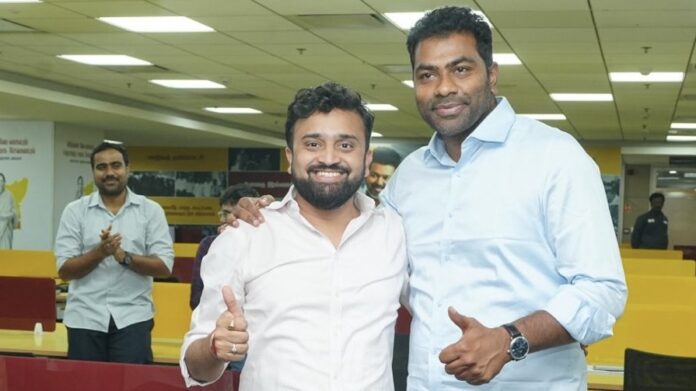
On the other side was a much smaller and sharply focused strategy unit led by Kapil Sahu, a former I-PAC member who reportedly exited the organisation nearly two years ago with a compact 12-member core team.
What followed surprised political observers across the country.
Despite the presence of multiple consultancy giants backing the ruling alliance, the DMK alliance failed to cross the 100-seat mark. Meanwhile, Vijay-led Tamilaga Vettri Kazhagam created history in its debut Assembly election by securing 108 seats, instantly becoming the biggest political success story of Tamil Nadu 2026.
Two Different Campaign Models
Political analysts believe the Tamil Nadu election showcased two completely different approaches to modern campaigning.
The traditional consultancy model relied heavily on large organisational structures, booth management systems, layered field operations and conventional political messaging. In contrast, Kapil Sahu’s team adopted a lean, aggressive and digitally driven strategy tailored specifically for Tamil Nadu’s rapidly changing voter behaviour.
TVK’s campaign strongly targeted youth voters, first-time voters and urban audiences through emotionally driven narratives, hyper-local communication and social media mobilisation. Rather than functioning like a standard political campaign, TVK’s strategy operated more like a cultural and emotional movement built around Vijay’s public image and mass popularity.
Observers say the campaign’s biggest strength was not just celebrity appeal, but the precision with which voter sentiment was identified and converted into political momentum.
The Rise of Kapil Sahu
Following the election results, Kapil Sahu has emerged as one of the most discussed names in India’s political strategy ecosystem.
Before leading TVK’s successful campaign, Sahu reportedly worked across multiple political environments including Delhi and Sikkim. Political circles also credit him with involvement in several high-profile campaigns in Delhi, including political battles that challenged the dominance of former Delhi Chief Minister Arvind Kejriwal.
Earlier in his career, Sahu was associated with I-PAC during the period when Prashant Kishor was actively leading the organisation. However, after Kishor’s exit, Sahu reportedly chose to leave the consultancy, believing Indian elections increasingly required adaptable ground-level political understanding rather than standardised campaign frameworks.
That decision eventually led to the formation of an independent and highly agile political strategy team one that would later shape one of the most dramatic election stories in Tamil Nadu’s recent history.
A Shift in India’s Political Consultancy Industry
The Tamil Nadu election has now triggered wider discussions about the future of political consulting in India.
For years, the industry was dominated by large organisations with huge manpower, structured hierarchies and expensive campaign systems. However, TVK’s breakthrough performance under a compact 12-member strategy team has demonstrated that speed, adaptability and deep voter understanding can sometimes outperform even the country’s biggest consultancy networks.
Political experts believe this election could become a turning point in how future campaigns are designed.
Instead of depending entirely on massive operational structures, political parties may increasingly look toward smaller, faster and more innovative teams capable of building direct emotional connections with voters and reacting quickly to changing public sentiment.
More Than Just a Celebrity Victory
While Vijay’s popularity undoubtedly played a crucial role in TVK’s rise, many observers believe the campaign’s execution strategy was equally responsible for the party’s breakthrough success.
The Tamil Nadu 2026 election has not only established TVK as a major political force but has also positioned Kapil Sahu among the emerging names in India’s new-generation political consultancy landscape.
From Sikkim to Delhi and finally Tamil Nadu, his political journey reflects a broader transformation underway in Indian politics, one where compact strategy teams with sharp execution and practical political understanding are beginning to challenge the dominance of traditional consultancy giants.
And in Tamil Nadu 2026, that challenge resulted in 108 seats and one of the most talked-about political success stories in recent Indian politics.