
New Delhi | May 28, 2026
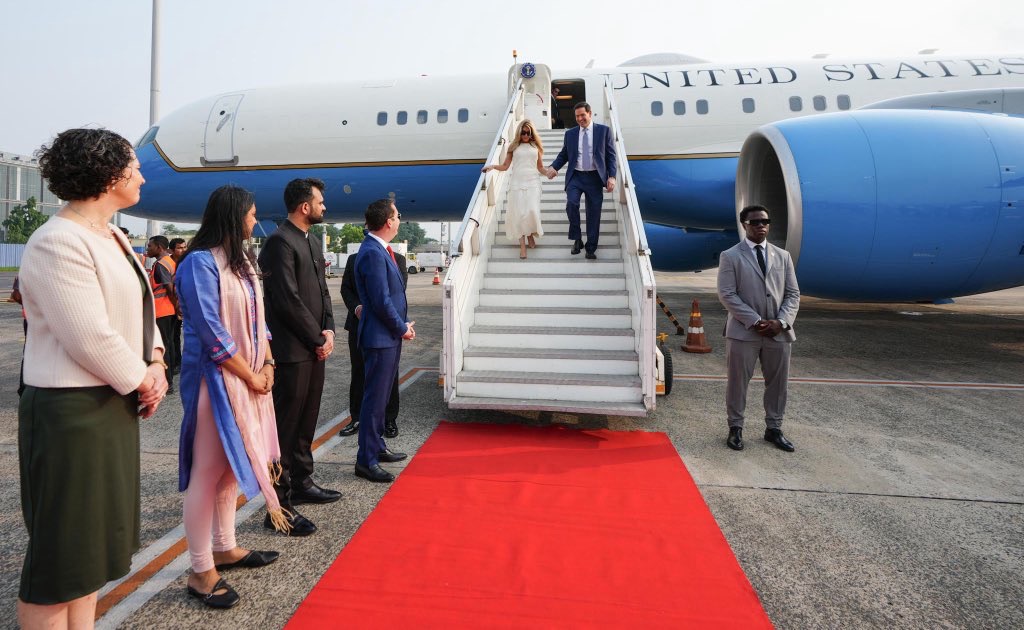
U.S. Secretary of State Marco Rubio wrapped up a four-day visit to India this week, in what analysts are calling one of the most significant American diplomatic missions to the subcontinent in recent years. The trip covering Kolkata, Agra, Jaipur, and New Delhi was Rubio’s first official visit to India and came at a moment of real tension between two countries that consider each other strategic partners.
Rubio arrived on a mission to shore up a partnership battered by President Trump’s tariffs and Washington’s renewed engagement with New Delhi’s rivals Pakistan and China. 
A Relationship That Needed Tending
The visit did not happen in a vacuum. Relations between India and the U.S. strained in recent months after the Trump administration imposed steep tariffs on Indian exports, partly over New Delhi’s continued purchases of Russian oil. The move angered Indian officials and fueled concerns in the Indian government over Washington’s reliability. 
Adding to that unease, Trump’s high-profile summit with Chinese President Xi Jinping in Beijing earlier this month had raised quiet alarm in New Delhi about whether Washington was recalibrating its regional priorities. India’s strategic establishment today appears more cautious about Washington than at any point in recent years,  according to foreign policy observers.
Kolkata First — A Deliberate Signal
Rubio began the trip not in India’s political capital but in Kolkata, a city that had not welcomed a senior American diplomat in fourteen years. Rubio arrived in the eastern city of Kolkata early Saturday, where he visited the Mother House, the headquarters of the Missionaries of Charity founded by Mother Teresa.
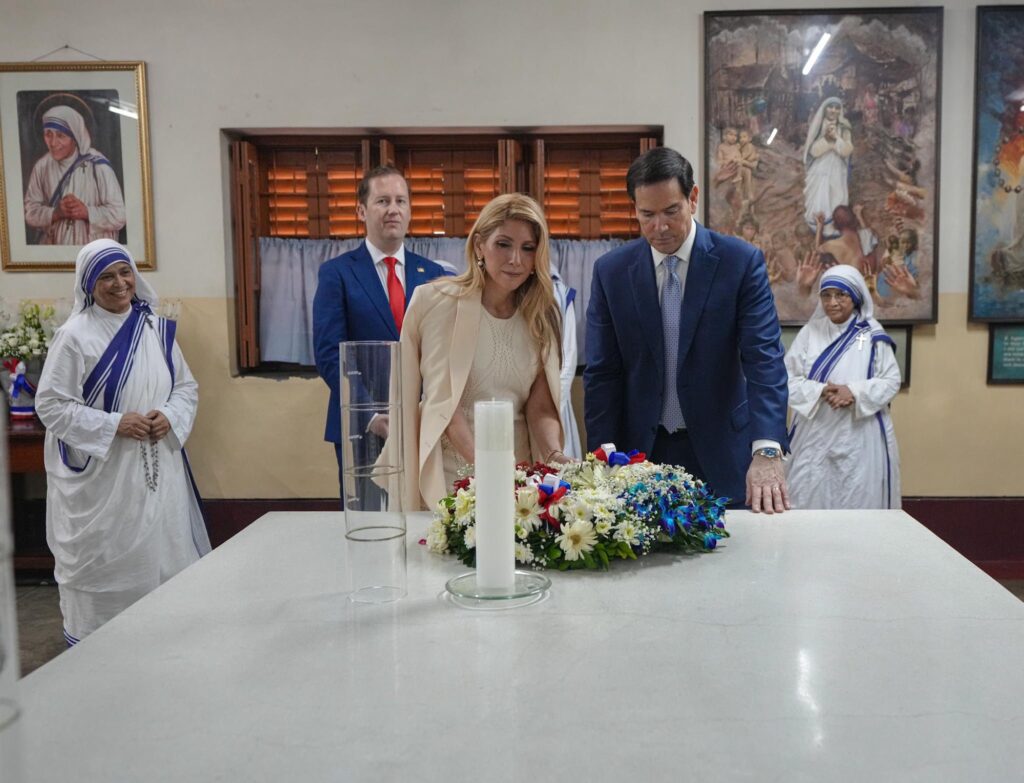
The visit carried personal significance for Rubio, a Catholic, and drew widespread attention across India.
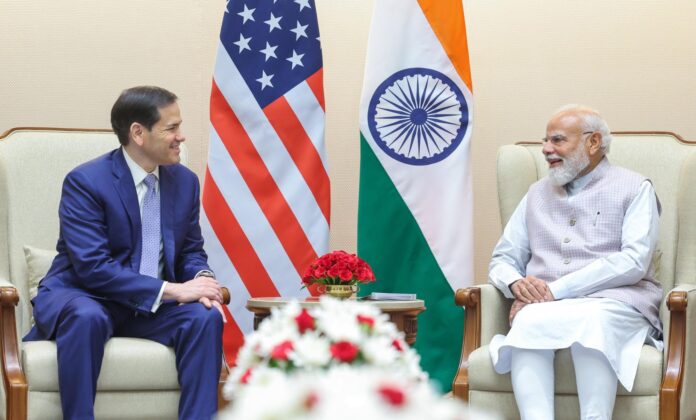
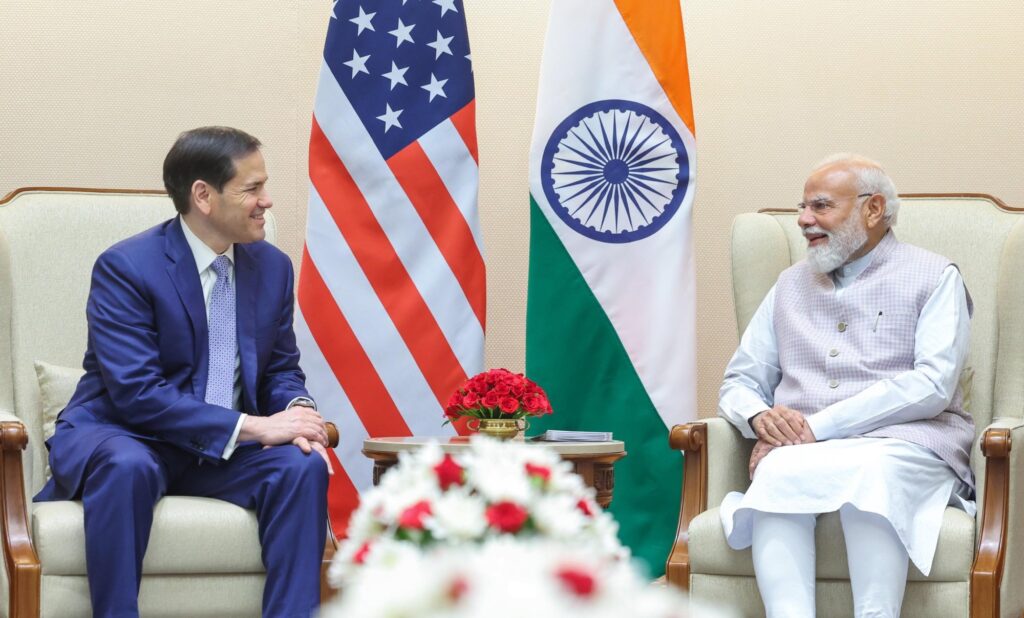
Later the same day, Rubio flew to New Delhi for talks with Prime Minister Narendra Modi. U.S. Ambassador Sergio Gor announced that Rubio extended an invitation on behalf of President Trump for Prime Minister Modi to visit the White House in the near future.
Trade, Energy, and Defence on the Table
In meetings with Modi and Foreign Minister Subrahmanyam Jaishankar, Rubio stressed cooperation on trade, energy, defense, and maritime security, saying the countries remained strategically aligned and expressing optimism about a broader trade deal.
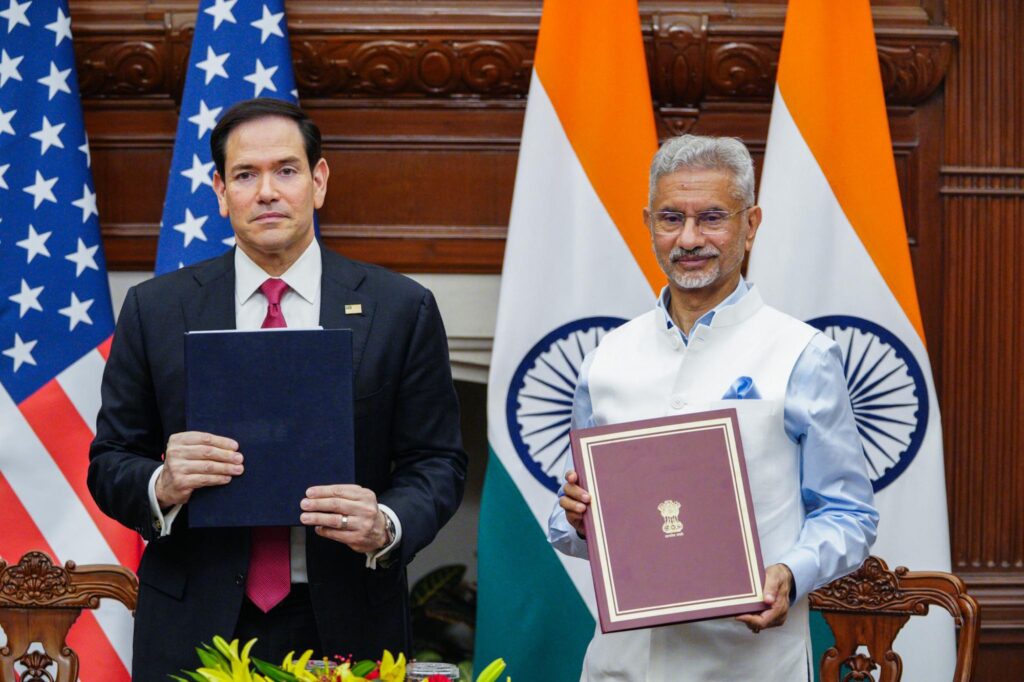
The talks followed a significant development on the trade front. The meeting between Rubio and Jaishankar came on the heels of a new trade deal announced by the Trump administration, lowering tariffs on India from 50 percent to 18 percent.  Both sides agreed to expand cooperation on energy, with India looking to diversify away from Russian oil amid ongoing disruptions to Gulf shipping lanes caused by the U.S.-Israeli conflict with Iran.
The State Department said Rubio and Modi agreed to deepen trade and defence cooperation and accelerate collaboration on critical and emerging technologies. 
Amber Forts and Embassy Ribbons
Not all of Rubio’s agenda was behind closed doors. His itinerary included stops in Agra and Jaipur, two of India’s most visited tourist destinations known for monuments, forts, and palaces. He also attended a gala reception in New Delhi marking the 250th anniversary of U.S. independence. 
In New Delhi, Rubio oversaw the inauguration of a new wing of the U.S. Embassy, calling the building “a sign of our commitment to this important relationship.” 
Quad Meeting Caps the Visit
Rubio participated in a Quad Foreign Ministers’ meeting on May 26, seen as an attempt to reassure regional allies of continued American engagement in the Indo-Pacific.  The grouping — which includes the U.S., India, Australia, and Japan — has become a key vehicle for maritime security cooperation and supply chain coordination as China expands its regional footprint. The ministerial was especially significant given that a planned Quad leaders’ summit had been cancelled earlier this year, raising doubts about the alliance’s momentum.
What It Means
Rubio’s visit will not resolve every tension in the India-U.S. relationship. India’s purchases of Russian oil, its tradition of strategic independence, and its careful balancing between great powers are structural realities no single trip can undo.
But the visit sent a message that Washington is paying attention. The trip marks an effort by Washington and New Delhi to steady strained relations as the two countries seek to reinforce strategic and economic ties despite recent trade tensions.  The interim trade deal, the White House invitation for Modi, and the Quad reaffirmation together suggest that both sides have decided the partnership is too important to let drift.
For South Asia watchers, the most telling detail may be where Rubio chose to start — not in a government ministry, but at a house of charity in Kolkata, paying respects to a woman who spent her life serving India’s poorest. It was a reminder that the strongest alliances are built not just on strategy, but on something that looks like genuine regard.
Reporting based on statements from the U.S. State Department, India’s Ministry of External Affairs, and coverage by AP, NPR, Al Jazeera, and PBS NewsHour. May 23–26, 2026.