
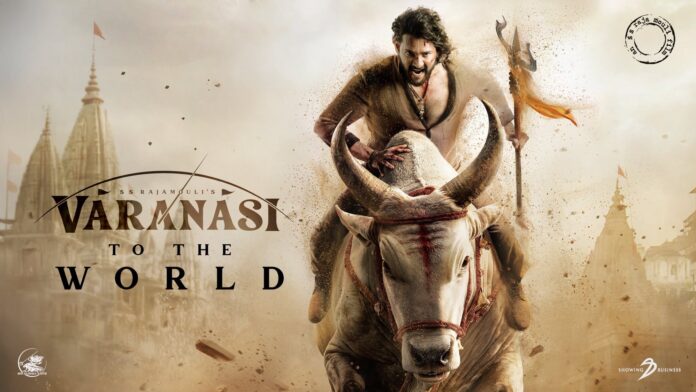
Hyderabad: SS Rajamouli has never been a filmmaker who bows to circumstance. From engineering real waterfalls on studio floors to convincing a tiger to act on cue, the Baahubali and RRR director has consistently turned obstacles into legend. But even Rajamouli cannot make wars disappear — and the escalating conflict in the Middle East is now quietly rewriting the production playbook for Varanasi, his most ambitious undertaking yet.
When the Flight Path Becomes a Warzone
The ripple effects of the Middle East crisis have spread far beyond the battlefield, quietly grounding film industries across Asia. The bulk of commercial air traffic between India and Europe passes through Dubai — a hub that has seen major airline disruptions amid the ongoing conflict. For large-scale productions like Varanasi, which require moving entire crews, heavy equipment, and international performers across continents, this isn’t a minor inconvenience. It’s a logistical earthquake.
Rajamouli’s team reportedly completed a schedule in Georgia before being forced to chart alternative return routes to India — paths that avoid the conflict zone entirely but come at a steep financial premium. Sources suggest the detours have added considerable strain to an already stretched production budget. For a film already reported to be the most expensive Indian production ever made — with estimates hovering around ₹1,400 crore — every unplanned expense carries enormous weight.
The Devara Set Becomes Varanasi
In a move that speaks to Rajamouli’s instinct for creative problem-solving, portions of the Varanasi shoot that were originally planned for specific international or domestic locations have been redirected to an existing large-scale studio environment — the elaborate set previously built for the Jr NTR-starrer Devara. The decision underscores a production philosophy Rajamouli has long championed: control the environment when the environment becomes uncontrollable.
This isn’t the first time the team has opted for constructed authenticity over real-world shooting. Earlier, rather than attempting to film in the actual city of Varanasi — a holy city teeming with pilgrims, narrow ghats, and infrastructure that makes large-scale filmmaking nearly impossible — the production built an elaborate recreation at Ramoji Film City in Hyderabad. Some structures were scaled down by approximately 30 percent to fit the studio footprint, yet the set remains a staggering feat of production design.
A Production That Refuses to Stand Still
What makes Varanasi’s ongoing production remarkable is not merely its scale, but its pace. Rajamouli — long known for perfectionism that has historically pushed delivery deadlines — appears to be operating at a different tempo this time. With roughly half the film now in the can, including the technically demanding Ramayana episode that required 60 days of shooting alone, the team is reportedly on track to wrap principal photography by June 2026.
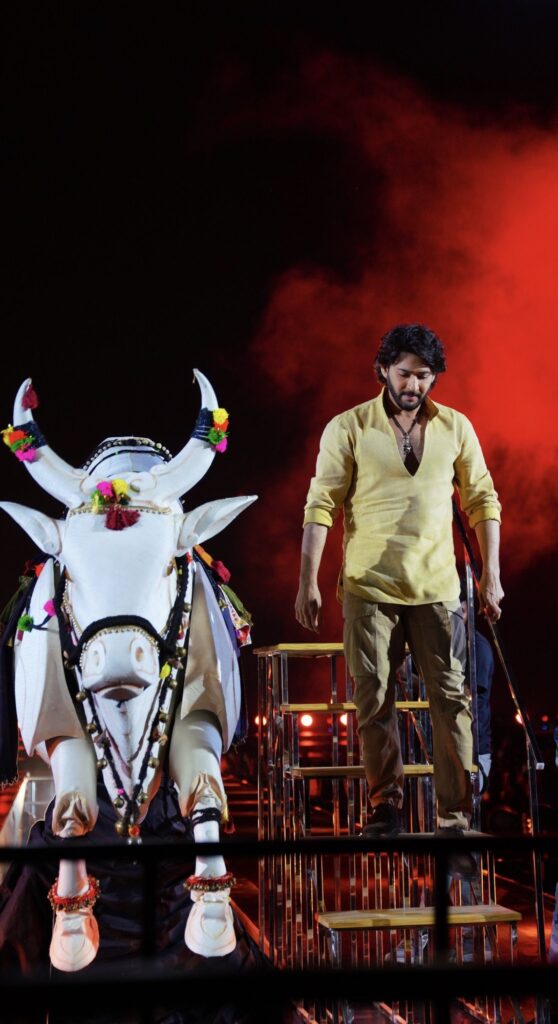
Post the Georgian schedule, the next major challenge on the horizon is an Antarctic shoot — a genuinely unprecedented undertaking. Varanasi is set to become the first Indian film, and only the fourth feature film in cinematic history, to shoot on location in Antarctica. The logistics alone are monumental: the team is expected to fly to South America and then reach the continent via a specially arranged cruise, with the full cast, support crew, and equipment in tow.
The Cast Holds Steady
Despite the turbulence, the film’s stellar lineup — Mahesh Babu, Priyanka Chopra Jonas, and Prithviraj Sukumaran — remains fully committed to the project. Babu, who plays the dual roles of the time-traveling hero Rudhra and the Hindu deity Lord Rama, underwent three months of Kalari martial arts training just to adapt his physical posture for the period sequences. Chopra Jonas returns to Indian cinema after nearly a decade of Hollywood work, while Sukumaran inhabits the role of the central antagonist, Kumbha — a futuristic, wheelchair-bound supervillain.
Rajamouli has also confirmed that Varanasi will be a single-film release — no two-part split — with a runtime of approximately three hours. The film is being shot in the 1.43:1 IMAX format, making it the first Indian production and the first non-English film to use this premium ratio.
Eyes on April 2027
With a worldwide theatrical release locked in for April 7, 2027, across standard, Dolby Cinema, and IMAX formats, the pressure on Rajamouli’s team is immense. But if the director’s track record is any indication, adversity — whether creative, logistical, or geopolitical — tends to produce his finest work.
Wars may redraw flight paths. They won’t redraw Rajamouli’s ambition.
Varanasi is produced by Sri Durga Arts and Showing Business, and will release in Telugu with dubbed versions in Hindi, English, Tamil, Malayalam, and Kannada.