
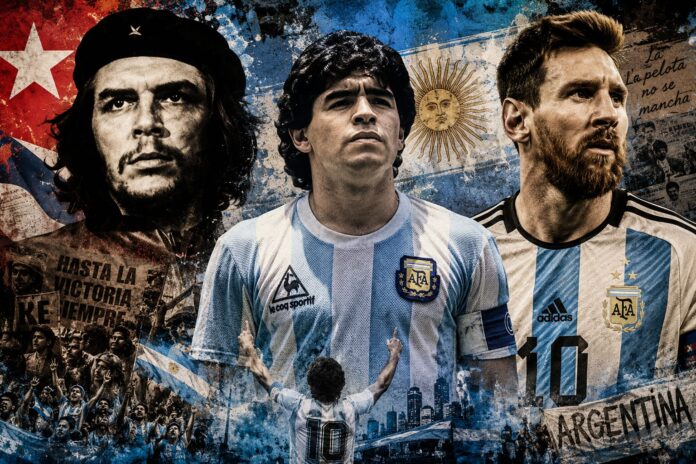
Every FIFA World Cup brings a familiar sight that stuns global football fans—the coastal Indian state of Kerala completely transforming into a sea of blue and white.From massive, towering Lionel Messi cutouts erected over local rivers to midnight processions celebrating Copa América and World Cup victories, the state’s passion for the Argentina national football team often mirrors the streets of Buenos Aires.
But why does a region in cricket-dominated India bleed blue and white so passionately? The answer lies in a perfect storm of broadcasting history, local tournament culture, and an obsession with legendary icons.
- The 1986 World Cup and the Maradona Phenomenon
For the older generation of Kerala football fans, the love affair with the Albiceleste began in 1986. This was the first ever World Cup widely broadcasted in live color television across Kerala via Doordarshan (India’s national broadcaster).
It perfectly timed with Diego Maradona’s legendary, gravity-defying performance in Mexico. To a population deeply rooted in working-class politics, Maradona wasn’t just a sporting genius; he was a flawed, anti-establishment hero who single-handedly took down geopolitical giants. His defiance cemented a fierce, emotional loyalty in Kerala households that has successfully been passed down through generations.
- Malappuram and the Roots of Kerala’s Football Culture
Long before international television arrived, football was already a religion in regions like Malappuram, Kozhikode, and Kannur.Northern Kerala, in particular, is world-famous for Sevens Football—a fast-paced, high-intensity 7-a-side local tournament format played on packed muddy fields in front of roaring crowds. Because the local communities already lived and breathed the sport, they naturally adopted international teams when world football became accessible. Supporting Argentina became a multi-generational family heirloom, passed from parents to children.
- The Modern Era: From Maradona to Lionel Messi
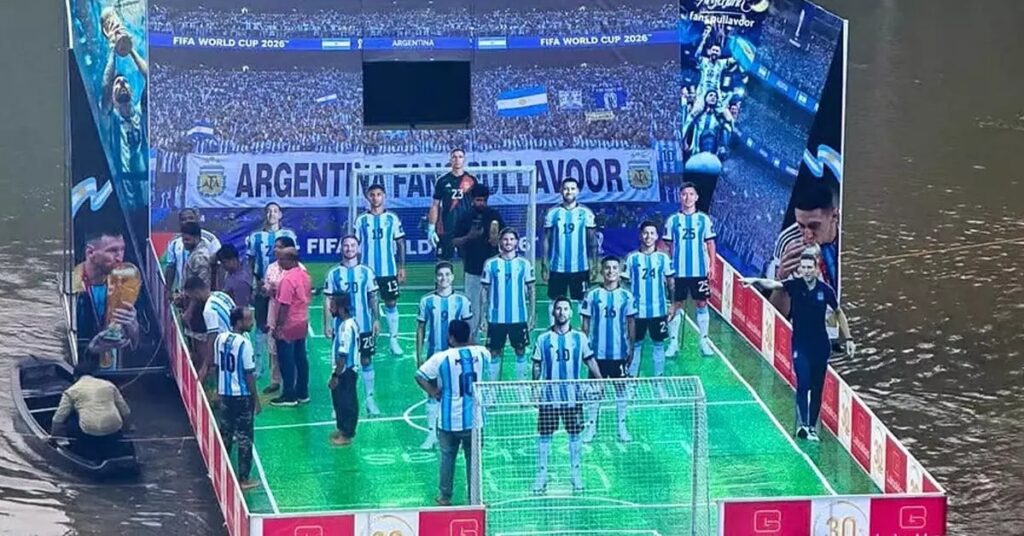
As the Maradona era faded, Lionel Messi seamlessly inherited the mantle. For Gen-Z and millennial fans in Kerala, Messi’s jaw-dropping consistency, magical dribbling, and humble demeanor rejuvenated the old bond. The climax of this connection was witnessed during the 2022 FIFA World Cup in Qatar. The sheer scale of celebrations in Kerala villages went viral globally. In fact, the iconic giant cutouts in Pullavoor and the unconditional love from Malayali fans caught the attention of the official Argentina National Team’s social media accounts, which publicly issued a message of gratitude to the fans in Kerala.
- The Latin American Cultural Overlap
There is also a subtle socio-political layer to this sports craze. Kerala has a historically prominent left-wing political landscape. Icons like Che Guevara are common fixtures on murals, flags, and college campuses across the state. While football is undoubtedly the primary driver, this long-standing cultural familiarity with Latin American history made adopting Argentina feel incredibly natural to many Keralites.
A Tradition Inscribed in Kerala’s Identity
Today, supporting Argentina is no longer just about ninety minutes of a football match; it is woven into the social fabric of the state. It is about local fan clubs raising thousands of rupees for charity, villages engaging in friendly banter with local Brazil fans, and a community finding its own expression of global identity through the beautiful game.
What began with Maradona in 1986 has grown into a cultural phenomenon that continues with each World Cup generation.