
By South Matters Tamil Nadu Desk | Economy
Tamil Nadu is widely recognized as one of India’s manufacturing powerhouses.
From automobile plants and textile hubs to electronics factories and construction projects, the state’s industrial economy continues to attract investment from across the world. However, behind this success lies a workforce that often remains invisible to the public eye.
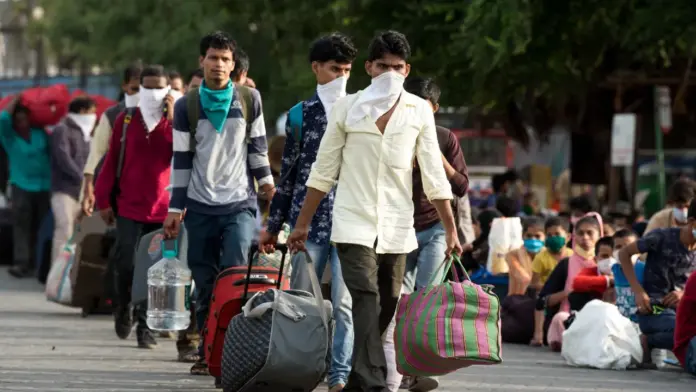
The story of North Indian Migrant Workers is deeply connected to Tamil Nadu’s economic growth. Thousands of workers from Bihar, Uttar Pradesh, Jharkhand, Odisha, West Bengal, and Assam travel hundreds of kilometers every year to find employment in the state’s industries.
Without them, many factories would struggle to meet production targets.
The Workforce Behind Tamil Nadu’s Growth
Over the past decade, Tamil Nadu’s industries have faced increasing labour shortages.
Many local workers have moved into higher-paying service jobs, government employment, or overseas opportunities. As a result, manufacturers began recruiting workers from northern and eastern India.
Today, migrant workers are present in industrial hubs such as Chennai, Sriperumbudur, Hosur, Coimbatore, Tiruppur, Salem, and Tiruchirappalli.
They work in automobile plants, textile units, warehouses, logistics centers, construction sites, and electronics manufacturing facilities.
Why Workers Move South
Economic opportunity remains the biggest reason.
Many migrants come from districts where employment options are limited and wages are lower. Tamil Nadu offers comparatively stable jobs and better earning potential.
For many families, migration has become an important source of income.
Money sent home helps support education, healthcare, housing, and daily expenses in their native villages.
Consequently, migration has become a lifeline for thousands of households across northern India.
Life Beyond the Factory Gates
Despite their contribution, migrant workers often face several challenges.
Language barriers remain one of the biggest obstacles. Many workers arrive without knowing Tamil, making communication difficult in daily life.
Housing conditions also vary widely. While some companies provide accommodation, others leave workers to arrange their own housing in crowded urban areas.
Healthcare access, social integration, and legal awareness continue to be concerns for worker welfare groups.
The Economic Impact
Industrial experts estimate that several sectors in Tamil Nadu now depend heavily on migrant labour.
The textile industry, construction sector, automobile manufacturing ecosystem, and logistics network all rely on workers from outside the state.
Business leaders argue that migrant labour has helped Tamil Nadu maintain its competitive advantage in manufacturing.
Furthermore, the availability of workers has supported expansion plans by both domestic and international companies.
The Social Debate
The growing presence of migrant workers has also triggered social and political discussions.
Some groups emphasize the need for stronger labour protections and better living conditions. Others highlight the importance of integrating migrant communities into local society.
At the same time, industry bodies stress that economic growth and labour mobility are closely linked.
Experts believe the challenge is not migration itself but ensuring safe, fair, and dignified working conditions.
Tamil Nadu’s Industrial Future
As Tamil Nadu seeks to attract more investments in electronics, semiconductors, renewable energy, and advanced manufacturing, demand for labour is expected to rise further.
This means migrant workers will continue to play a crucial role in the state’s development.
Their contribution may not always appear in economic reports or political speeches. Yet their labour powers factories, builds infrastructure, and keeps supply chains moving.
Tamil Nadu’s industrial success story is often told through investments and exports. However, it is equally a story of the workers who left their homes in search of opportunity and became an essential part of the state’s growth.