
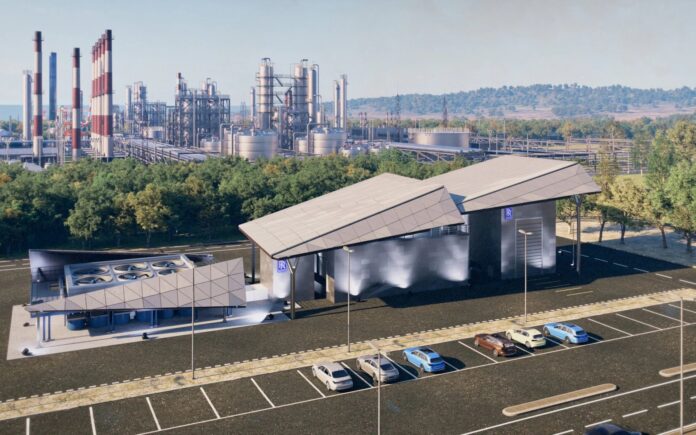
London, June 14, 2026 — Rolls-Royce Holdings has signed new cooperation agreements with organizations in the United Kingdom and Japan to accelerate the development of advanced modular nuclear reactors designed for future industrial and energy applications.
The Rolls Royce Advanced Nuclear Reactors initiative focuses on high-temperature gas-cooled Advanced Modular Reactors (AMRs), a next-generation nuclear technology expected to support energy security, industrial decarbonization, and long-term net-zero goals.
Rolls Royce Advanced Nuclear Reactors Target Industrial Power Needs
The proposed reactors are designed to generate between 15 and 35 megawatts of power using advanced coated particle fuel technology.
Supporters of the project say the fuel design offers enhanced safety characteristics and is engineered to withstand extreme operating conditions. The reactors are expected to serve industrial sites that require reliable and continuous energy supplies.
Potential applications include:
- Data centers
- Steel manufacturing facilities
- Chemical processing plants
- Military installations
- Remote industrial operations
The compact design of the reactors could allow deployment in locations where large conventional nuclear plants are not practical.
UK-Japan Cooperation Strengthens Nuclear Innovation
The agreements build upon existing nuclear cooperation between the United Kingdom and Japan.
Officials involved in the partnership say combining expertise from both countries can accelerate research, development, and eventual deployment of advanced reactor technologies.
According to project leaders, the collaboration aims to shorten development timelines while improving technological capabilities and commercial viability.
Industry experts view international cooperation as a key factor in advancing next-generation nuclear systems.
Demonstration Reactor Could Arrive by Mid-2030s
The Rolls Royce Advanced Nuclear Reactors program is expected to move through several stages of development before commercial deployment.
Current projections suggest a demonstration reactor could be operational by the mid-2030s, depending on regulatory approvals, funding availability, and technical progress.
The project forms part of broader efforts to develop smaller, more flexible nuclear technologies capable of supporting future energy demand while reducing carbon emissions.
Nuclear Energy Gains Renewed Global Momentum
Many countries are increasingly exploring advanced nuclear technologies as they seek reliable low-carbon energy sources.
Global energy organizations have highlighted nuclear power as an important component of future energy systems, particularly as electricity demand rises due to industrial growth, artificial intelligence infrastructure, and large-scale data centers.
The UK-Japan-Rolls-Royce collaboration aligns with international ambitions to significantly expand global nuclear energy capacity by 2050.