
By South Matters Political Desk | Tamil Nadu Politics
Tamil Nadu’s 2026 election result will be remembered as the political arrival of Chief Minister Vijay and the stunning rise of TVK. But behind the public rallies, emotional speeches and massive crowds stood a lesser-known research operation that shaped one of the most sophisticated election campaigns in recent Indian political history.
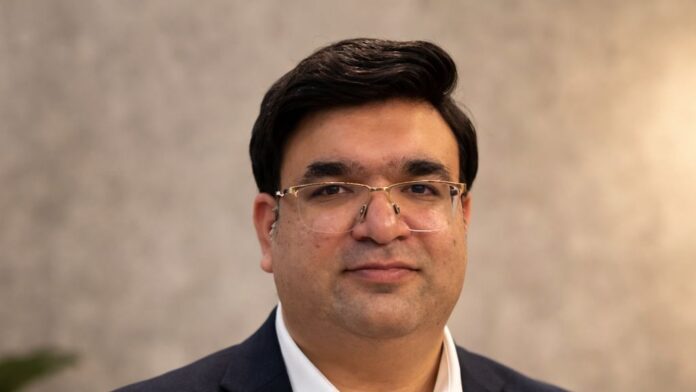
At the centre of the TVK manifesto research was political strategist Divyashish Sharma, whose analytical frameworks and policy architecture reportedly became the backbone of TVK’s election machinery.
Who Is Divyashish Sharma?
Divyashish Sharma, a BITS Pilani graduate, entered the Tamil Nadu political landscape with over a decade of experience across multiple Indian states.
Before joining TVK, Sharma worked with major political parties including BJP, INC, AAP, SKM and SDF. He also advised several Chief Ministers and played key strategic roles in multiple successful election campaigns.
At I-PAC, Sharma founded the Strategic Research & Insights Division and led Digital Media Research & Communications. Political insiders credit him with contributing to the 2017 Punjab Assembly election victory and the 2019 Andhra Pradesh Assembly election campaign.
His political profile expanded further during the 2019 Sikkim Legislative Assembly election, where he introduced the “Income Guarantee” narrative and Universal Basic Income concept into mainstream Indian electoral politics.
TVK Manifesto Took A Different Route
The TVK manifesto research reportedly departed sharply from traditional political manifesto formats.
Instead of using standard welfare-based categorisation, the document was structured around the three-part philosophy of the Thirukkural — Aram, Porul and Inbam.
Party insiders claim the manifesto attempted to merge Tamil civilizational values with modern governance models.
The document proposed several ambitious ideas including:
- India’s first Ministry of Artificial Intelligence
- AI-powered doorstep welfare delivery
- “Makkal Arangam” public legislative participation platform
- A $1.5 trillion Tamil Nadu economy vision by 2036
- Separate budget frameworks for climate action, healthcare, social justice and Tamil heritage preservation
The manifesto quickly became one of the most discussed political documents of the 2026 election campaign.
The Hidden Data Model Behind TVK’s Victory
Sources familiar with the campaign say Sharma’s biggest contribution came through voter analytics and constituency-level mapping.
The TVK manifesto research reportedly included a “Confidence Potential Model” designed to identify constituencies where TVK’s hidden support base was stronger than public surveys indicated.
Sharma also built Psychographic Motivational Profiles across professions, age groups and social categories to understand why voters were leaving traditional parties like DMK and AIADMK.
According to insiders, the campaign did not just measure anti-incumbency. It attempted to measure the emotional intensity of “Maatram” — the desire for complete political change.
This framework reportedly helped TVK identify areas where change was emotionally settled and areas where voters still remained undecided.
How TVK Used Research Like A National Campaign
Political observers believe TVK’s campaign operated with a level of voter analysis usually associated with established national parties.
The combination of cultural messaging, emotional branding, constituency analytics and AI-based governance promises created a unique political model in Tamil Nadu.
The TVK manifesto research also raised broader questions about how a debutant party managed to deploy such advanced voter targeting and behavioural analysis before contesting its first major election.
Why This Strategy Is Now Being Discussed Nationally
The success of TVK’s campaign has triggered discussions among political strategists across India.
Experts believe the Tamil Nadu 2026 election may become a case study in combining regional identity politics with high-level data-driven campaign management.
While Vijay became the public face of the movement, insiders say the deeper architecture of the campaign was built quietly through research, voter psychology and long-term narrative planning.
With TVK now in power, political observers are watching closely to see whether the same research-driven governance model will continue inside the administration.