
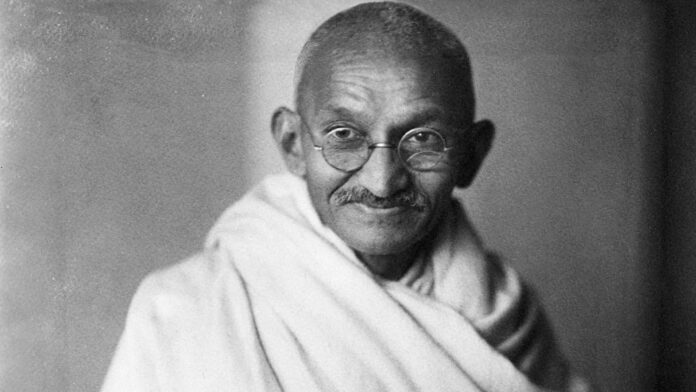
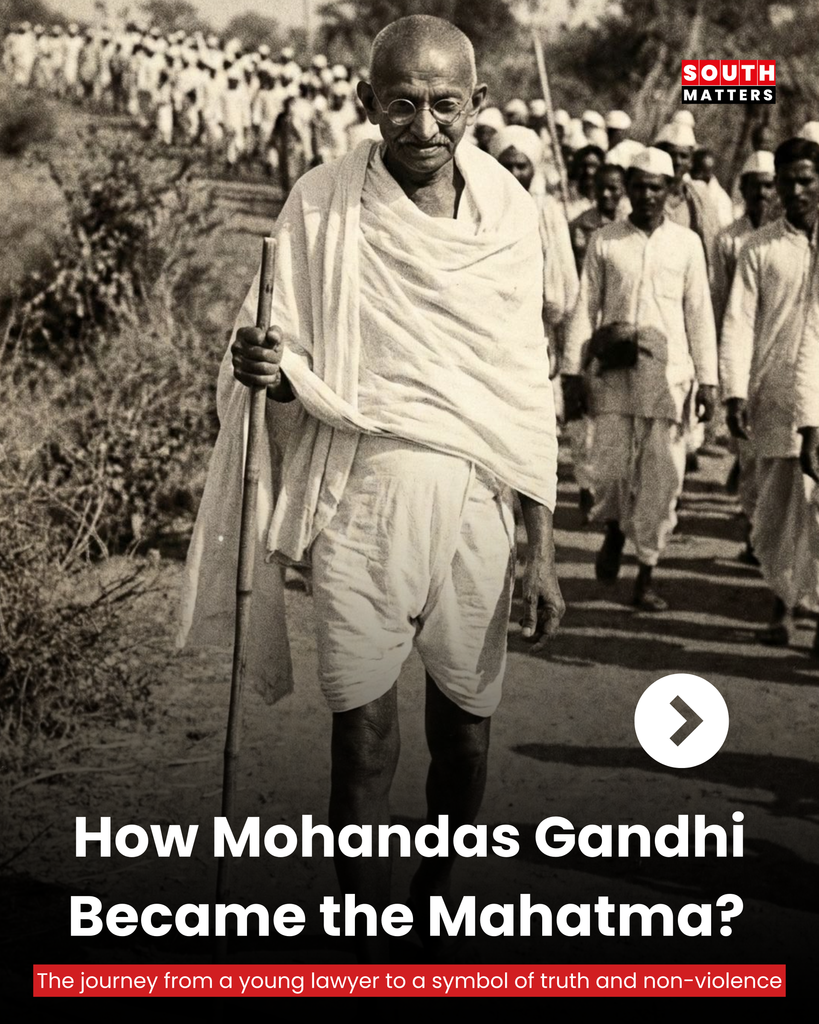
Mahatma Gandhi remains one of the most important figures in India’s history. Every year, India observes Gandhi Jayanti on October 2 to remember his life and ideas. But how did Mohandas Karamchand Gandhi become known as the Mahatma? His journey took him from a small town in Gujarat to the centre of India’s freedom struggle. Along the way, he faced racism, injustice and political pressure. He chose truth and non-violence as his way to fight these challenges.
Gandhi’s Early Life
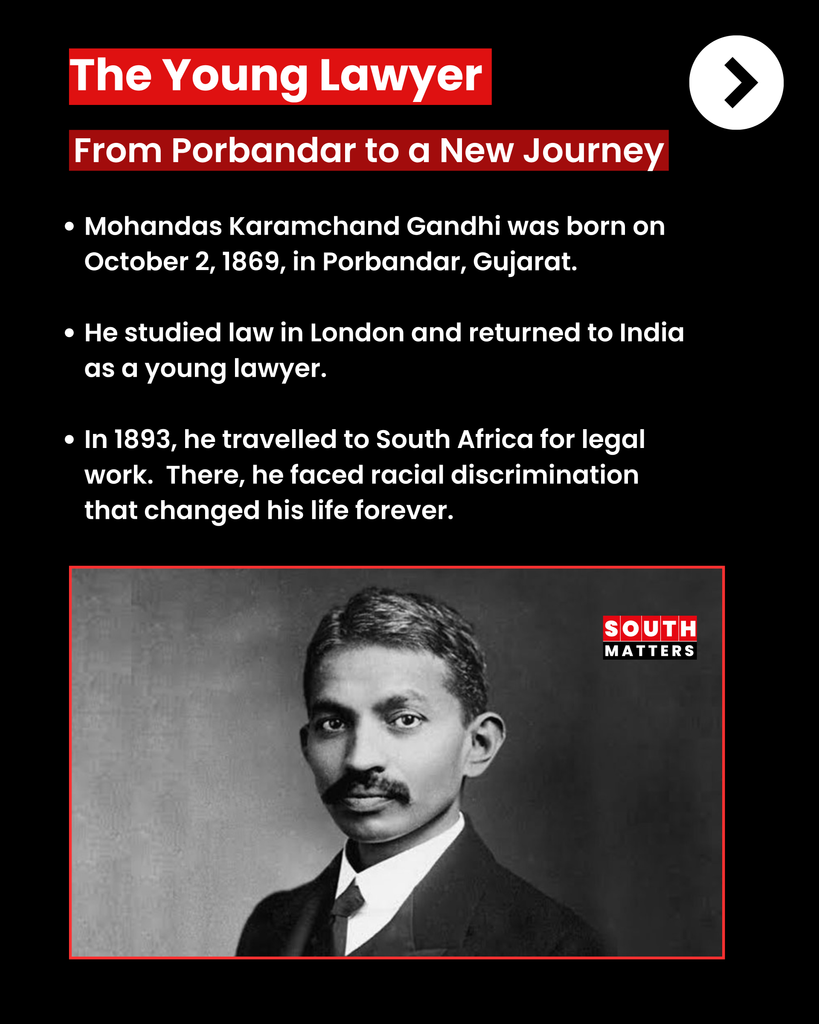
Mohandas Karamchand Gandhi was born on October 2, 1869, in Porbandar, Gujarat. He grew up in a family that valued religion, discipline and simple living. Gandhi later travelled to London to study law. He returned to India in 1891 and started working as a lawyer.
His early career did not bring him much success. However, a legal case took him to South Africa in 1893. That journey changed his life.
The South Africa Turning Point
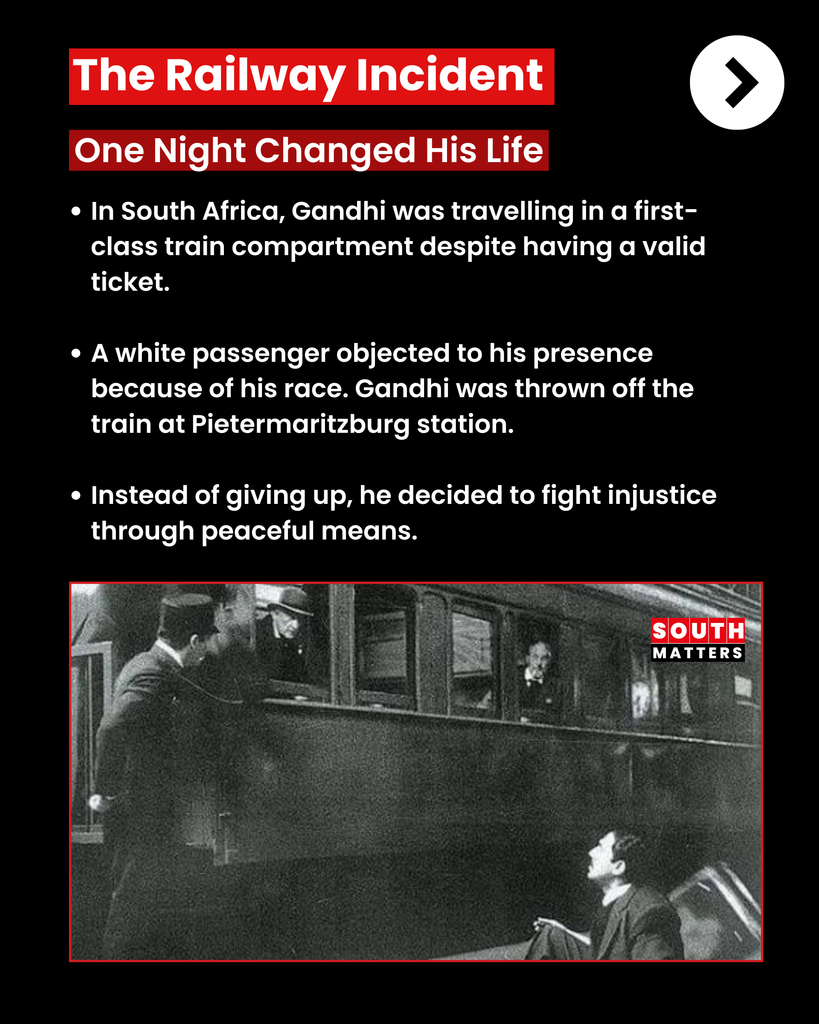
Gandhi faced racial discrimination in South Africa. One major incident happened during a train journey. Gandhi had a valid first-class ticket, but a white passenger objected to his presence. Railway staff forced him to leave the train at Pietermaritzburg.
The incident shocked Gandhi. Instead of responding with violence, he decided to fight unfair treatment through peaceful action. He started organising Indians in South Africa and spoke against discriminatory laws.
Satyagraha Changes His Life
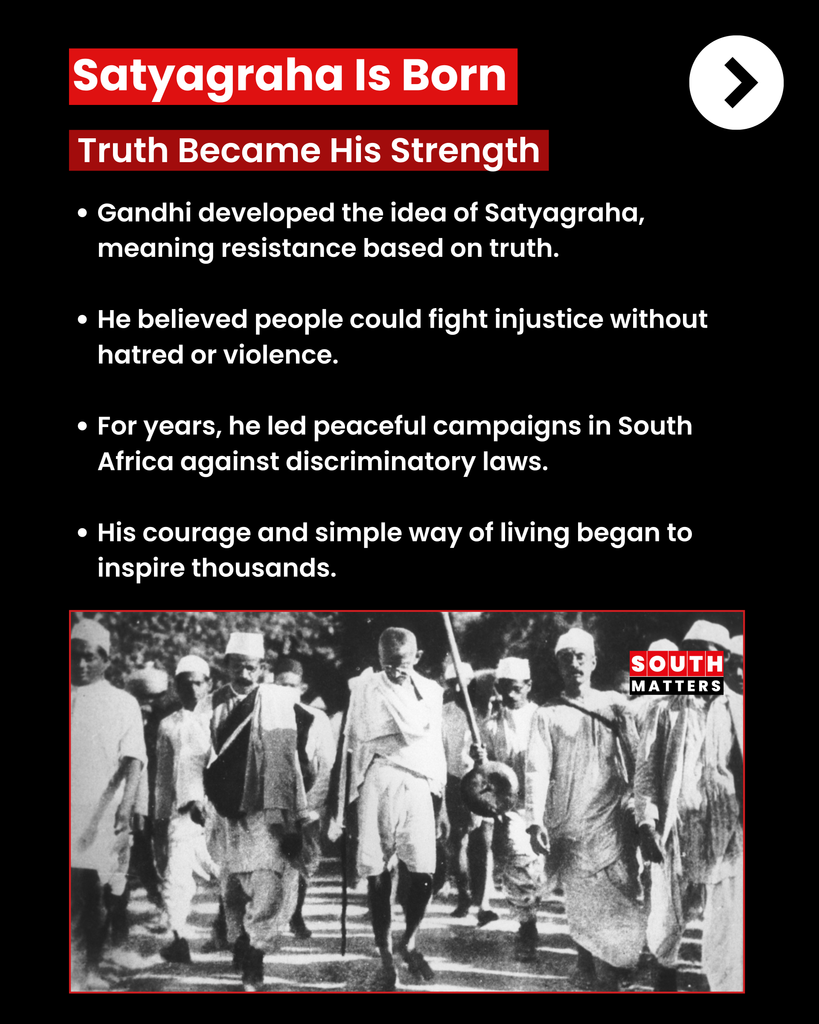
Gandhi developed the idea of Satyagraha during his years in South Africa. The word refers to a strong commitment to truth and peaceful resistance.
Gandhi believed people could oppose injustice without hatred. He encouraged people to remain peaceful even when they faced punishment or arrest. His methods helped him become a respected leader.
Gandhi Returns to India
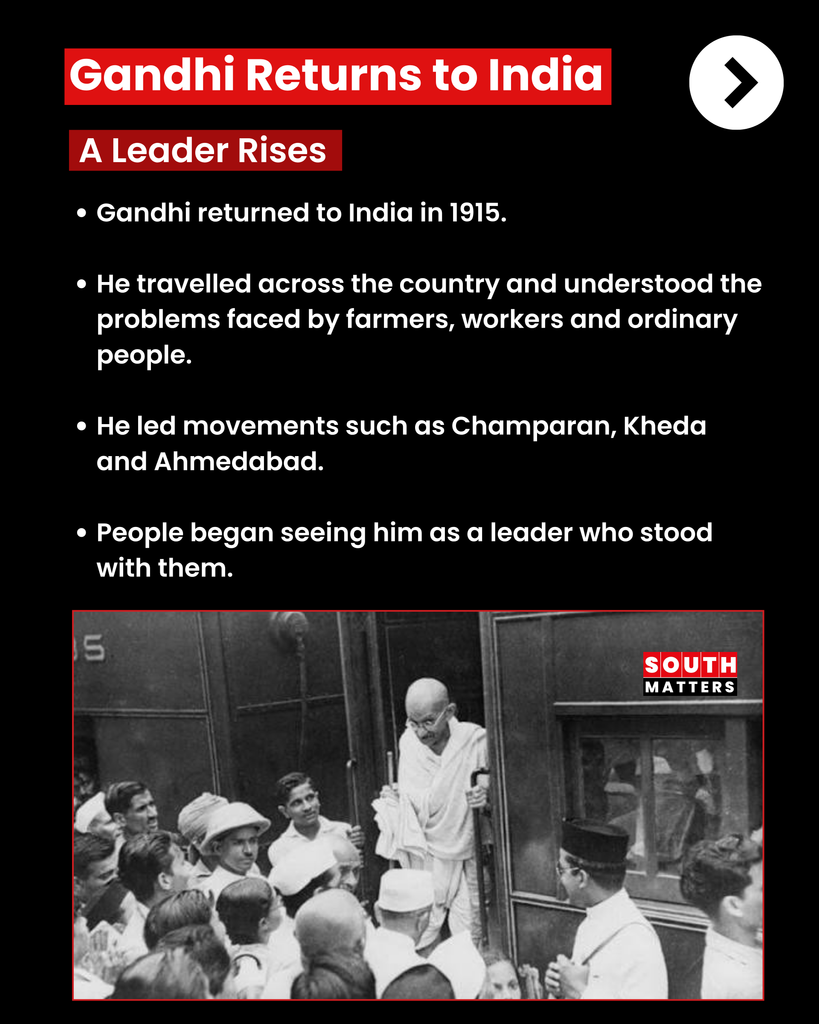
Gandhi returned to India in 1915. He travelled across the country and met farmers, workers and ordinary citizens. These visits helped him understand the problems faced by Indians under British rule.
He soon became involved in major public movements. In Champaran, he supported farmers who faced unfair conditions. He later supported people in Kheda and workers in Ahmedabad.
These movements increased his connection with ordinary Indians.
From Leader to Mahatma
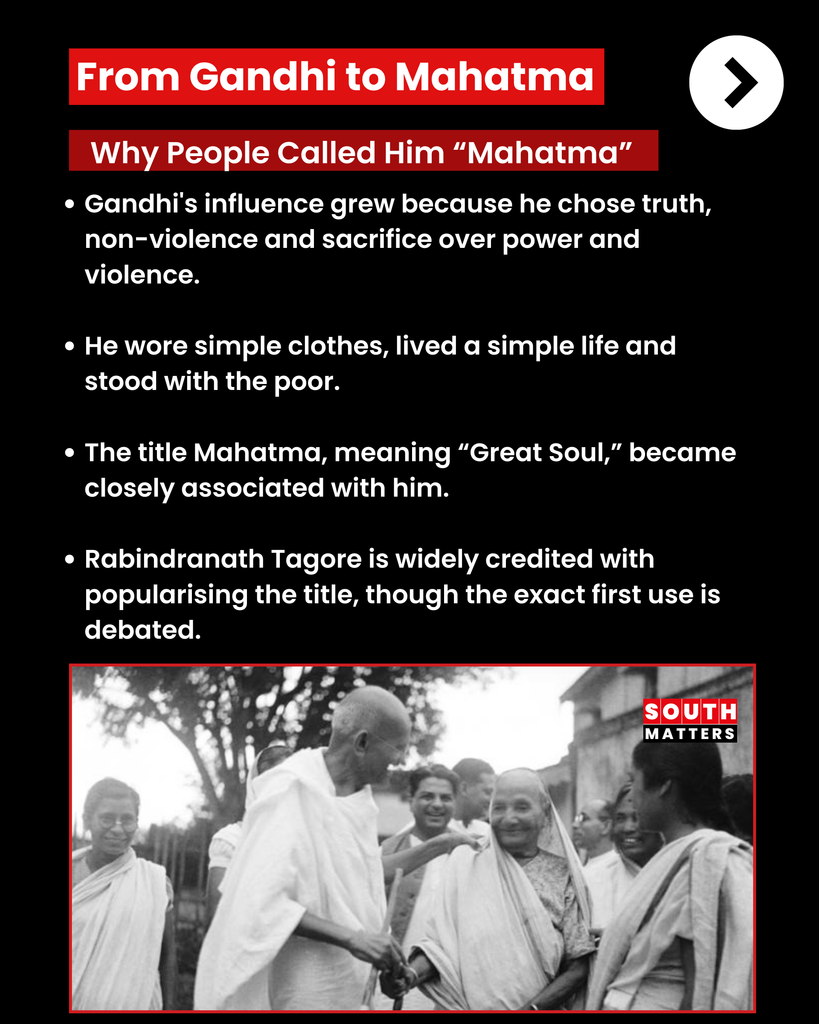
Gandhi’s influence continued to grow. He promoted simple living, truth, non-violence and self-reliance. He wore simple clothes and tried to live close to the people he represented.
His approach made him different from many political leaders of his time. He did not depend on violence to challenge British rule.
The title “Mahatma” means “Great Soul”. Rabindranath Tagore is widely credited with helping popularise the title for Gandhi, although historians still debate the exact origin and first use of the name.
The Freedom Struggle
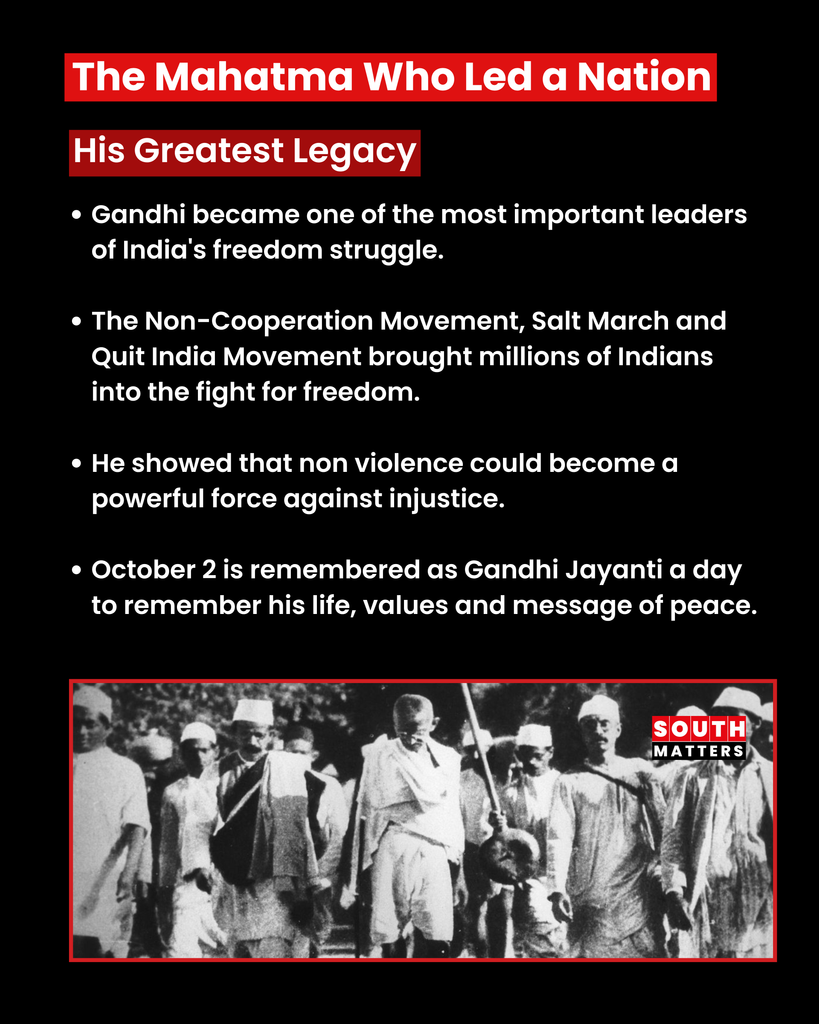
Gandhi later became a central figure in India’s freedom movement. He led or supported major campaigns, including the Non-Cooperation Movement, the Civil Disobedience Movement and the Quit India Movement.
The 1930 Salt March became one of his most famous protests. Gandhi walked from Sabarmati Ashram to Dandi to challenge the British salt law.
In 1942, he supported the Quit India Movement and called for an end to British rule. His message reached millions of Indians.
His Message After Independence
India became independent on August 15, 1947. However, Gandhi did not celebrate the day with large events. Instead, he focused on areas affected by communal violence.
He continued to call for peace and unity. He wanted Hindus, Muslims and people from all communities to live together peacefully.
On January 30, 1948, Gandhi was assassinated in New Delhi. His death shocked India and the world.
Today, Gandhi’s ideas continue to influence people across many countries. His message of truth, non-violence and peaceful resistance remains an important part of his legacy.
Gandhi Jayanti is therefore more than a day to remember a historical leader. It is a day to remember the values that shaped Gandhi’s life and his fight against injustice.