
Tamil Nadu Chief Minister C. Joseph Vijay is scheduled to meet Andhra Pradesh Chief Minister N. Chandrababu Naidu in Vijayawada on Tuesday, October 13, to discuss water-related issues between the two states. The proposed talks are expected to focus on the supply of Krishna water to Chennai through the Telugu Ganga project and possible river-linking initiatives.
Chennai depends on several water sources to meet the needs of its growing population. The Telugu Ganga project plays an important role in supplying Krishna water to the city. The agreement for the project was signed on April 18, 1983, during the tenures of Tamil Nadu Chief Minister M. G. Ramachandran and Andhra Pradesh Chief Minister N. T. Rama Rao.
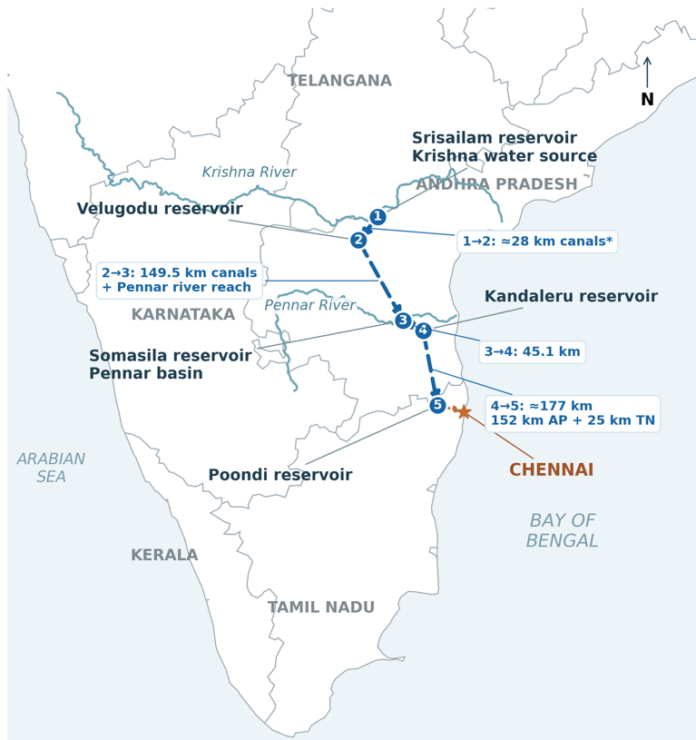
Under the arrangement described in the project framework, Andhra Pradesh, Karnataka and Maharashtra were to contribute water from their respective Krishna allocations. The planned route carries water through Srisailam, Velugodu, Somasila and Kandaleru before reaching Poondi in Tamil Nadu. The stated allocation is 15 thousand million cubic feet (TMC), with 12 TMC expected to reach the Tamil Nadu border after accounting for losses from evaporation and seepage.
The proposed meeting could provide an opportunity to discuss how the existing arrangement can operate more reliably. Key issues include establishing a clear schedule for water releases, coordinating canal maintenance to reduce losses and introducing joint monitoring to compare the quantity released with the amount actually received.
Alongside the Telugu Ganga project, the Godavari–Gundar river-linking proposal is another water-related issue that may attract attention. However, the specific proposals and decisions expected from the meeting have not yet been confirmed.
Water-sharing arrangements between states require coordination, infrastructure maintenance and transparent monitoring. For Chennai, reliable water deliveries are important for urban supply, while Andhra Pradesh must also manage its own irrigation and drinking-water requirements.
The meeting could therefore be an important opportunity for both governments to review existing commitments and discuss future cooperation. Any final decisions on water releases, canal maintenance or new river-linking projects will depend on the official discussions and subsequent announcements from the two state governments.