
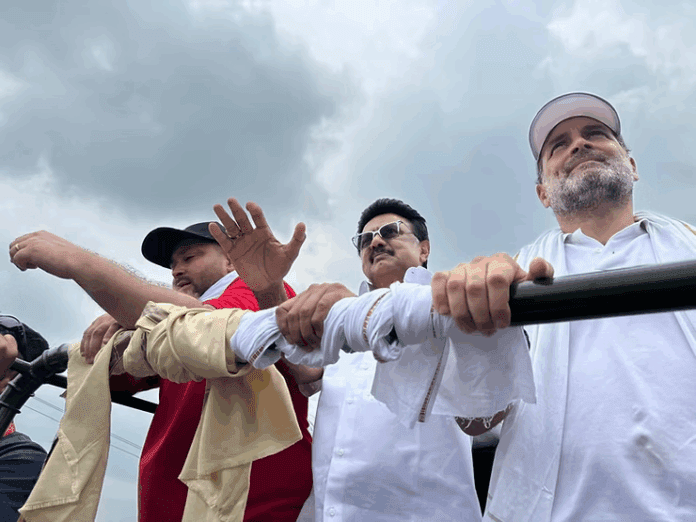
The participation of Tamil Nadu Chief Minister M.K. Stalin alongside Rahul Gandhi in the Voter Adhikar Yatra in Bihar marks a significant political moment beyond regional boundaries. At a time when Indian democracy faces intense contestations over voter rights and electoral integrity, Stalin’s presence in Bihar injects a multi-state dimension to a cause often viewed through local lenses.
The Voter Adhikar Yatra, spearheaded by Rahul Gandhi and allied opposition leaders like Tejashwi Yadav, aims to rally public awareness against voter suppression and irregularities ahead of the critical Bihar assembly elections slated for late 2025. Stalin’s decision to join this movement is not merely an act of solidarity but a strategic expression of democratic kinship that underscores the indivisibility of people’s political rights across India’s diverse federal fabric.
Stalin’s vocal condemnation of alleged mass deletions in Bihar’s voter rolls — decrying the removal of millions from electoral lists as “more dangerous than terrorism” — reflects a candid critique of authoritarian tendencies that threaten democratic inclusiveness. This message resonates deeply in Tamil Nadu, where electoral reforms and voter access have also been contested, making these struggles emblematic of national stakes.
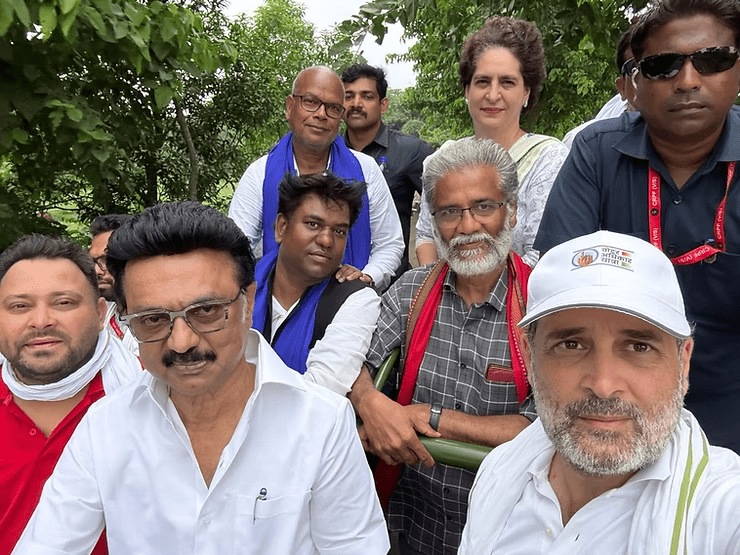
However, Stalin’s participation has drawn sharp criticism from the ruling BJP, which accuses him and allied opposition leaders of disrespecting Bihar’s identity and political culture. The BJP’s backlash illustrates how issues of voter rights are often weaponized within polarizing partisan narratives that risk overshadowing substantive democratic concerns. In this context, Stalin’s presence challenges such politicization by reframing voter rights as foundational rather than factional.
The alliance between Stalin and Rahul Gandhi on Bihar’s streets encapsulates a broader opposition unity essential for safeguarding republic values in a politically fractious era. It highlights the importance of cross-regional collaboration to oppose electoral manipulations that could set dangerous precedents nationwide.
Yet, the opposition must also tread carefully. The cultural and political particularities of Bihar — with its caste dynamics and religious sentiments — require a nuanced approach to democratic activism that Stalin and others must respect to avoid alienating local constituencies. As the election nears, balancing pan-Indian solidarity with localized political sensitivities will be critical.
In conclusion, MK Stalin’s bold move to join the Voter Adhikar Yatra alongside Rahul Gandhi is a clarion call for protecting the right to vote as the cornerstone of India’s democracy. It is an editorial reminder that democracy transcends regional frontiers and demands vigilant defense against any attempts to undermine its sacred processes.