
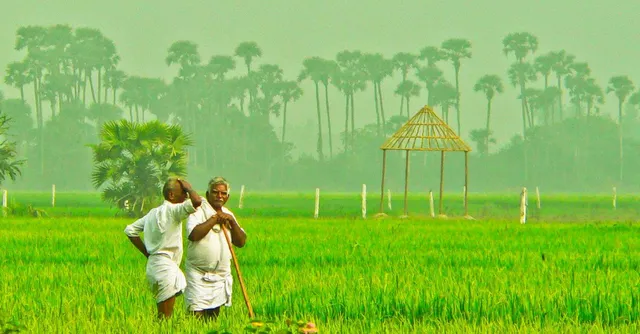
By South Matters Andhra Pradesh Desk | Agriculture
When crops fail in Andhra Pradesh, government relief packages and compensation announcements often dominate headlines. However, behind every compensation list lies a group of farmers who rarely receive attention—tenant farmers.
The Andhra Pradesh Tenant Farmers who lease land and cultivate crops play a crucial role in the state’s agricultural economy. Yet many remain outside the safety net of compensation schemes, crop insurance programs, and institutional credit systems.
For thousands of farming families, this gap can mean the difference between recovery and financial ruin.
The Backbone of Andhra Agriculture
Tenant farming has become a defining feature of agriculture across Andhra Pradesh.
In districts such as East Godavari, West Godavari, Krishna, Guntur, Nellore, and Prakasam, large numbers of cultivators farm leased land instead of land they own.
These farmers invest in seeds, fertilizers, labor, and irrigation. They take on the risks of farming. However, when disaster strikes, ownership records often determine who receives official support.
As a result, the actual cultivator may receive little or no compensation.
Why Compensation Remains a Challenge
Most government compensation systems rely on land ownership records.
Therefore, relief payments often go to registered landowners rather than tenant farmers who cultivated the crop.
Many tenant farmers also operate through informal agreements. These arrangements are common in rural Andhra Pradesh but often lack legal documentation.
Without official records, proving cultivation becomes difficult during compensation assessments.
Consequently, many farmers remain invisible within the system.
Climate Risks Make Matters Worse
The challenge has become more serious in recent years.
Cyclones, floods, droughts, and unseasonal rains have increased the risks associated with farming.
Each weather event can wipe out months of investment and hard work. Yet tenant farmers frequently struggle to access the same support available to landowners.
Agricultural experts warn that climate change could deepen this crisis if reforms are delayed.
Debt and Financial Pressure
Many tenant farmers depend on private loans to fund cultivation.
Unlike landowners, they often face difficulties obtaining institutional credit from banks. Therefore, they rely on informal lenders who charge higher interest rates.
When crops fail, repayment becomes a major burden.
In some cases, families sell assets, reduce household spending, or migrate in search of alternative income sources.
Farmer associations argue that better financial inclusion could significantly improve rural resilience.
Calls for Reform
Farmer groups have repeatedly demanded stronger protections for tenant cultivators.
They want simplified registration systems, easier access to crop insurance, direct compensation mechanisms, and recognition of cultivation rights.
Supporters argue that modern technology and digital land records can help identify genuine cultivators more effectively.
Furthermore, they believe compensation should follow the farmer who bears the risk, not simply the person who owns the land.
A Question of Recognition
The debate over tenant farmers is ultimately about recognition.
These farmers grow food, support rural economies, and contribute significantly to Andhra Pradesh’s agricultural output. Yet many continue to remain outside the protection offered by welfare programs.
As agriculture faces growing economic and climate challenges, policymakers may need to rethink how support reaches those who actually work the land.
For Andhra Pradesh, addressing the concerns of tenant farmers is not just an agricultural issue. It is a question of fairness, livelihoods, and rural development.