By South Matters Andhra Pradesh Desk | Industry & Economy
For years, the debate around the Vizag Steel Plant Privatisation issue has dominated political discussions in Andhra Pradesh. Political parties, trade unions, industry experts, and policymakers have all weighed in on the future of the iconic steel plant.
However, beyond the headlines and political statements lies a deeper story—one about workers, families, small businesses, and communities whose futures remain uncertain.
The battle over the future of the Visakhapatnam Steel Plant is not just an economic issue. It is also a social issue that affects thousands of livelihoods across the region.
More Than Just a Steel Plant
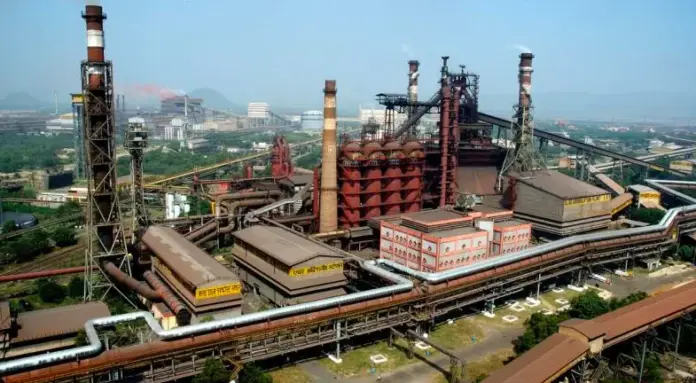
The Rashtriya Ispat Nigam Limited is one of Andhra Pradesh’s largest industrial establishments.
Over the decades, the plant has generated direct and indirect employment for thousands of people. The growth of surrounding areas, businesses, transport services, housing colonies, and educational institutions has been closely linked to the plant’s operations.
For many families, the steel plant represents economic security built over generations.
Workers Face Growing Uncertainty
The privatisation debate has created concerns among employees and contract workers.
Labour groups argue that job security remains one of the biggest worries. Several worker organizations have staged protests over fears of workforce reductions and changes in employment conditions. Reports of contract worker agitations and demands for reinstatement have further highlighted these concerns.
For many workers, the uncertainty extends beyond salaries. It affects housing, healthcare, education, and long-term financial planning.
The Ripple Effect on Local Businesses
The impact goes beyond plant employees.
Small shops, transport operators, restaurants, service providers, and suppliers depend on economic activity generated by the steel plant.
Whenever uncertainty affects industrial operations, local businesses also feel the pressure. Reduced spending can affect entire neighborhoods that have grown around the plant over several decades.
Economic experts often describe such industries as “anchor institutions” because their influence extends far beyond factory gates.
The Land and Community Question
The Vizag Steel Plant also carries emotional significance.
The project emerged after a long public movement and remains deeply connected to Andhra Pradesh’s industrial identity. Many families contributed land and supported the establishment of the plant during its early years.
As a result, discussions about privatisation often trigger concerns about public assets, land use, and the original vision behind the project.
Why Supporters and Critics Differ
Supporters of privatisation argue that structural reforms could improve efficiency, attract investment, and strengthen competitiveness.
Critics, however, point to factors such as debt burdens, raw material costs, and the long-standing demand for captive mines as issues that deserve attention before ownership changes are considered.
This difference in perspective has kept the debate alive for years.
The Human Cost Often Goes Unnoticed
Public discussions frequently focus on balance sheets, investments, and industrial policy.
Yet the human impact often receives less attention.
Behind every policy decision are workers worried about employment, families concerned about financial stability, and communities trying to protect local economic ecosystems.
These concerns explain why the issue continues to generate strong emotions across Andhra Pradesh.
The Road Ahead
The future of the Vizag Steel Plant remains a subject of debate.
Regardless of the eventual outcome, policymakers will need to consider not only economic calculations but also the broader social consequences.
The invisible cost of the privatisation fight cannot be measured solely in financial terms.
It is reflected in the uncertainty faced by workers, the struggles of small businesses, and the hopes of communities that view the steel plant as more than just an industrial unit.